High-Temperature Alloy Materials in Automotive and Train Solutions
As emission regulations tighten globally and engine efficiencies are pushed to the limit, exhaust gas temperatures in modern automobiles and rail systems are rising significantly. The era of using standard 304 or 316L stainless steel for exhaust manifolds and turbo housings is rapidly ending.
If you are an automotive design engineer or a procurement manager, you face a critical challenge: balancing thermal fatigue resistance, oxidation limits, and material cost.
In this guide, we move beyond basic material datasheets. We will analyze the practical "upgrade paths" for exhaust and engine components, sharing insights we've gained from supplying high-temperature alloys to the automotive and rail industries.
The 850°C Threshold – When to Upgrade from Stainless Steel
For decades, 321 and 347 stabilized stainless steels were the go-to materials for exhaust manifolds, handling continuous temperatures up to roughly 850°C. However, with the advent of turbocharged direct-injection engines, exhaust gas temperatures can easily exceed 950°C.
The Engineering Reality:
When 321/347 stainless steel is pushed beyond its limits, thermal fatigue leads to cracking, and the protective oxide scale begins to spall.
The Solution: This is the tipping point where engineers must transition to Nickel-Based Superalloys.
-
Inconel® 625 offers excellent oxidation resistance and high creep strength, making it ideal for turbo housings and high-performance exhaust systems.
-
Inconel® 718 provides exceptional high-temperature strength (up to 700°C) and is the standard for heavy-duty diesel exhaust valves and high-stress turbocharger wheels.
ZYTC Quality Note: The performance of Inconel 718 depends heavily on its γ'' (gamma double prime) strengthening phase, which requires precise control of Niobium (Nb) and Titanium (Ti). We use Direct Reading Spectrometers to verify every batch's chemistry before it leaves our warehouse.
 |
 |
 |
 |
 |
| UNS N07718 / Alloy 718 / 2.4668 | UNS N06625 / Alloy 625 / 2.4856 | UNS N07001 / Waspaloy / 2.4654 | UNS N07080 / Alloy 80A / 2.4952 | UNS N07208 / Alloy 282 |
Valve Trains & Wear Resistance – The Cobalt Advantage
Engine valves and valve seats face a unique combination of high heat and severe metal-to-metal sliding wear (galling). Standard superalloys often fail here.
-
For extreme wear: Stellite® 6 (Alloy 6B) is the industry benchmark. Its high cobalt content provides a self-mating wear resistance that nickel alloys cannot match.
-
For heavy-duty diesel exhaust valves: Nimonic® 80A is widely used for its excellent combination of high-temperature strength and corrosion resistance up to 815°C.
-
For the highest performance (Racing/High-End): Inconel® 751 or Haynes® 282 are used where extreme thermal fatigue resistance and creep strength are paramount.
Engineering Tip: If your Alloy 6B valve seats are experiencing premature wear, it is often due to uneven carbide distribution. Our Metallurgical Microscopes are used to inspect the microstructure of our cobalt rods, ensuring uniform carbide precipitates for maximum wear life.
 |
 |
 |
 |
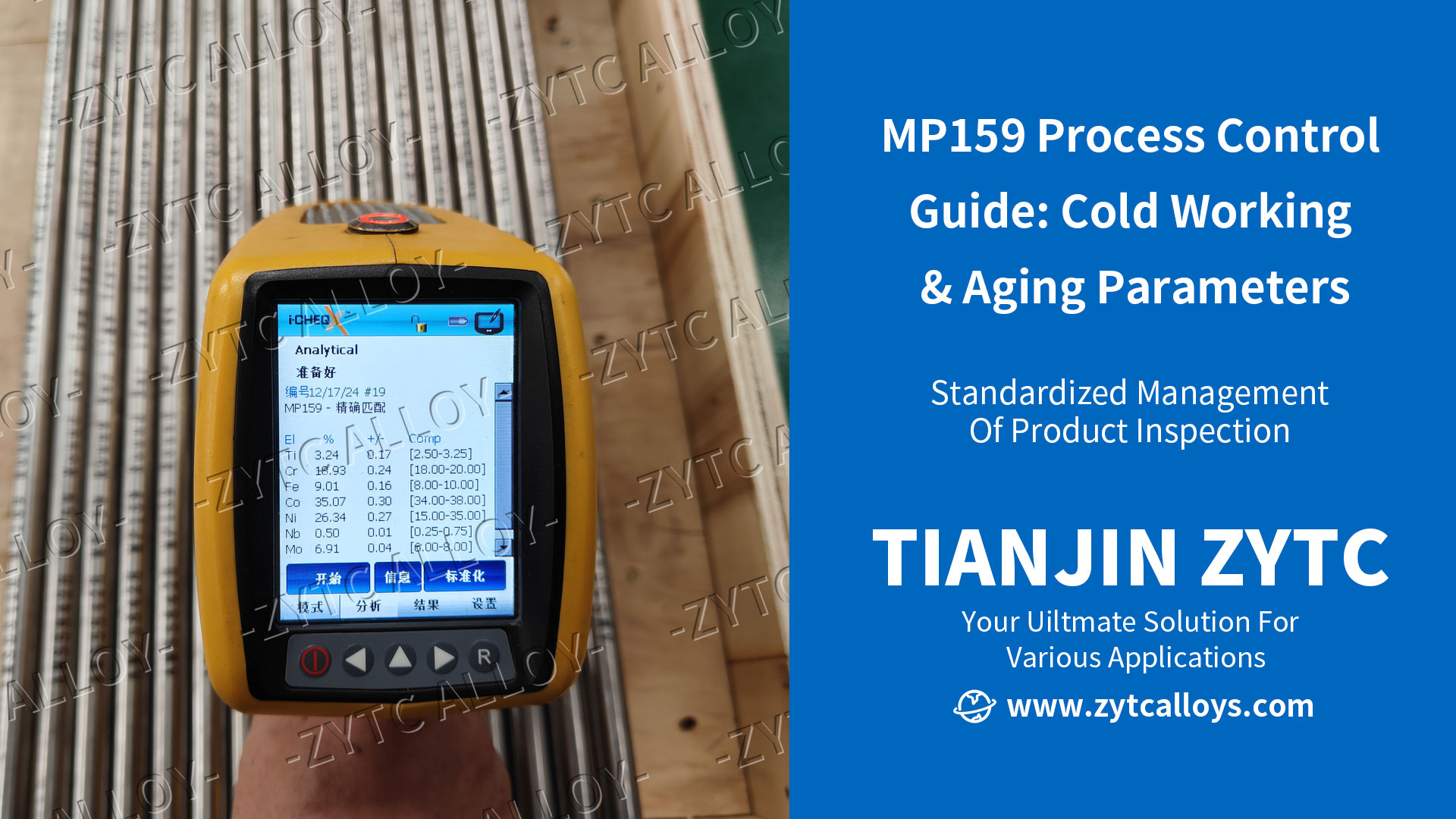
| UNS R30016 / Cobalt Alloy 6B | UNS R30159 / MP159 Cobalt Alloy | UNS R30188 / Alloy 188 / 2.4683 | UNS R30605 / Alloy L605 / 2.4964 |
Weight Reduction – Titanium Alloys in Rail and Performance Vehicles
In high-speed rail and performance automotive, reducing unsprung weight is critical.
While Ti-6Al-4V (Grade 5) is standard for connecting rods and suspension components, it has a temperature limit of around 400°C. For exhaust valves and high-temperature fasteners reaching 550°C, Ti-6242 is the necessary upgrade. It offers superior creep resistance and maintains high strength at elevated temperatures.
 |
 |
 |
 |
| 321 Stainless Steel / 1.4541 | 316L Stainless Steel / 1.4404 | 15-5PH / UNS S15500 / XM-12 | 17-4PH / AISI 630 / UNS S17400 |
 |
 |
 |
| Titanium Grade 5 - Ti-6Al-4V - UNS R56400 | UNS R54620 / Ti-6Al-2Sn-4Zr-2Mo-Si | Titanium Grade 15V-3Cr-3Al-3Sn / UNS R58153 |
The "Hidden" Challenges in Rail Diesel Engines
Rail systems (like locomotives and DMUs) present a different challenge: massive, continuous load demands.
-
Piston Crowns & Exhaust Valves: Require materials like Inconel 718 and Nimonic 80A to withstand the continuous thermal cycling.
-
Exhaust Aftertreatment (DPF/EGR): Haynes 188 (L605) and Inconel 625 are frequently selected for their resistance to oxidation and sulfidation in complex exhaust gas environments.
-
Braking Systems: Nitronic® 60 provides excellent galling resistance for brake pads and bushings compared to standard 316.
How to Verify Your Supplier (Don't Just Trust the Mill Cert)
When sourcing these premium materials, a paper certificate is not enough. To ensure your automotive parts meet safety and durability standards, your supplier must have in-house verification capabilities.
At ZYTC Alloy, we operate a fully equipped laboratory to guarantee material integrity:
-
100% Chemical Verification: Using Spectrometers to prevent material mix-ups (e.g., ensuring you get true Inconel 625, not a counterfeit).
-
Mechanical Testing: Universal Testing Machines verify tensile and yield strength at specific heat treatment conditions.
-
Microstructure Analysis: To ensure the grain size and phase distribution are optimized for thermal fatigue resistance.
Conclusion
Choosing the right high-temperature alloy for automotive and rail applications is a balance of temperature, wear, weight, and cost. As emission standards evolve, upgrading to the right nickel, cobalt, or titanium alloy is no longer optional—it's a necessity for reliability.
Need help selecting the right material?
Send your specific operating conditions (temperature, atmosphere, stress) to our technical team. We provide material matching advice and certified supply for your critical components.
📧 Email: daisy@zytcsteel.com
📱 WhatsApp/WeChat: +86 17335753350
Titanium Alloy Grades and Properties
High-Temperature Alloys in Semiconductor Industry Solutions
Related Article