Beyond 304 Stainless Steel: 4 Alloys with Superior Strength, Corrosion Resistance & Weldability

EN 1.4301 (AISI 304) is the undisputed workhorse of the stainless steel world. It offers a great balance of corrosion resistance, formability, and cost. However, when engineers push the limits of pressure, temperature, or highly aggressive chemical environments, 304 often falls short.
When your project requires higher tensile strength, superior yield strength, and better corrosion resistance without completely sacrificing weldability, standard stainless steels are no longer enough. You need to look into advanced austenitic alloys, duplex steels, or precipitation-hardening grades.
Here is a technical breakdown of the four best material families that outperform 304.
1. High-Nitrogen Austenitic Stainless Steels (e.g., Nitronic 60 / XM-19)
If your primary goal is a drop-in upgrade for 304 that significantly boosts strength while maintaining excellent weldability, nitrogen-strengthened austenitic steels are the answer.
-
Yield & Tensile Strength: Roughly twice the yield strength of 304 in the annealed condition. Through cold working, tensile strengths can exceed 200 ksi (1380 MPa).
-
Corrosion Resistance: Superior to 304. The high nitrogen content significantly improves resistance to pitting and crevice corrosion in chloride environments.
-
Weldability: Excellent. Because they retain a fully austenitic microstructure, they weld almost exactly like 304, without the need for complex pre-heat or post-weld heat treatments.
2. Duplex Stainless Steels (e.g., 2205 / UNS S32205)
Duplex steels feature a mixed microstructure of austenite and ferrite, providing an exceptional combination of strength and stress-corrosion cracking (SCC) resistance.
-
Yield & Tensile Strength: Yield strength (≥450 MPa) is more than double that of 304 (~170-205 MPa). This allows for thinner, lighter-weight designs.
-
Corrosion Resistance: A massive upgrade over 304. Duplex 2205 has a PREN (Pitting Resistance Equivalent Number) of ~35, compared to 304's ~18. It is virtually immune to chloride SCC and highly resistant to pitting.
-
Weldability: Good, but requires strict process control. You must control the heat input and interpass temperature carefully to maintain the 50/50 austenite-ferrite balance in the weld zone. It is not as "forgiving" as 304.
3. Precipitation Hardening Stainless Steels (e.g., 17-4 PH)
When absolute mechanical strength is the driving factor, 17-4 PH is the industry standard.
-
Yield & Tensile Strength: This is where 17-4 PH shines. After a simple single-stage aging treatment (H900), yield strength reaches 135 ksi (930 MPa) and tensile strength hits 190 ksi (1310 MPa). This is a massive leap from 304.
-
Corrosion Resistance: Generally comparable to 304, though it can be slightly lower in specific highly acidic environments due to the copper content.
-
Weldability: Fair. It can be welded, but the welding process usually requires post-weld re-solution annealing and aging to restore the joint's strength and corrosion resistance.
4. Super-Austenitic & Nickel-Based Alloys (e.g., Alloy 20, Inconel 625)
If 304 fails due to extreme chemical corrosion (like sulfuric acid or high-temperature chlorides), you must step up to superalloys.
-
Strength: Higher than 304, especially at elevated temperatures.
-
Corrosion Resistance: Ultimate. Alloy 20 was specifically designed for sulfuric acid service. Nickel-based alloys like Inconel 625 maintain extreme corrosion resistance and high strength at temperatures up to 980°C.
-
Weldability: Good, but requires matching high-alloy filler metals (e.g., ERNiCrMo-3) and careful joint preparation.
The Quick Selection Matrix
| Material | Yield Strength vs 304 | Corrosion vs 304 | Weldability Ease |
|---|---|---|---|
| 304 (Baseline) | Standard | Standard | Excellent (Baseline) |
| Nitronic 60 | 2x Higher | Better (Chlorides) | Excellent |
| Duplex 2205 | 2x Higher | Much Better (SCC/Pitting) | Strict Control Required |
| 17-4 PH (Aged) | 6x Higher | Similar / Slightly Better | Fair (Requires post-weld aging) |
| Inconel 625 | Higher (especially hot) | Extreme | Good (Requires matching filler) |
How to Choose?
-
Need an easy-to-weld upgrade for pressure vessels? → Choose High-Nitrogen Austenitic (Nitronic 60).
-
Need high strength for structural components and chloride resistance? → Choose Duplex 2205.
-
Need ultimate mechanical strength for aerospace/medical parts? → Choose 17-4 PH.
-
Handling aggressive sulfuric or high-temperature corrosive media? → Choose Inconel 625 or Alloy 20.
Sourcing these advanced alloys shouldn't be a gamble. At ZYTC Alloy, we supply certified high-performance alternatives to standard 304. Whether you need a 50kg sample of 17-4 PH for R&D, or bulk duplex steel pipes for a chemical plant, every batch is verified in our in-house laboratory with full MTR traceability.
📧 Email: daisy@zytcsteel.com
📱 WhatsApp/WeChat: +86 17335753350
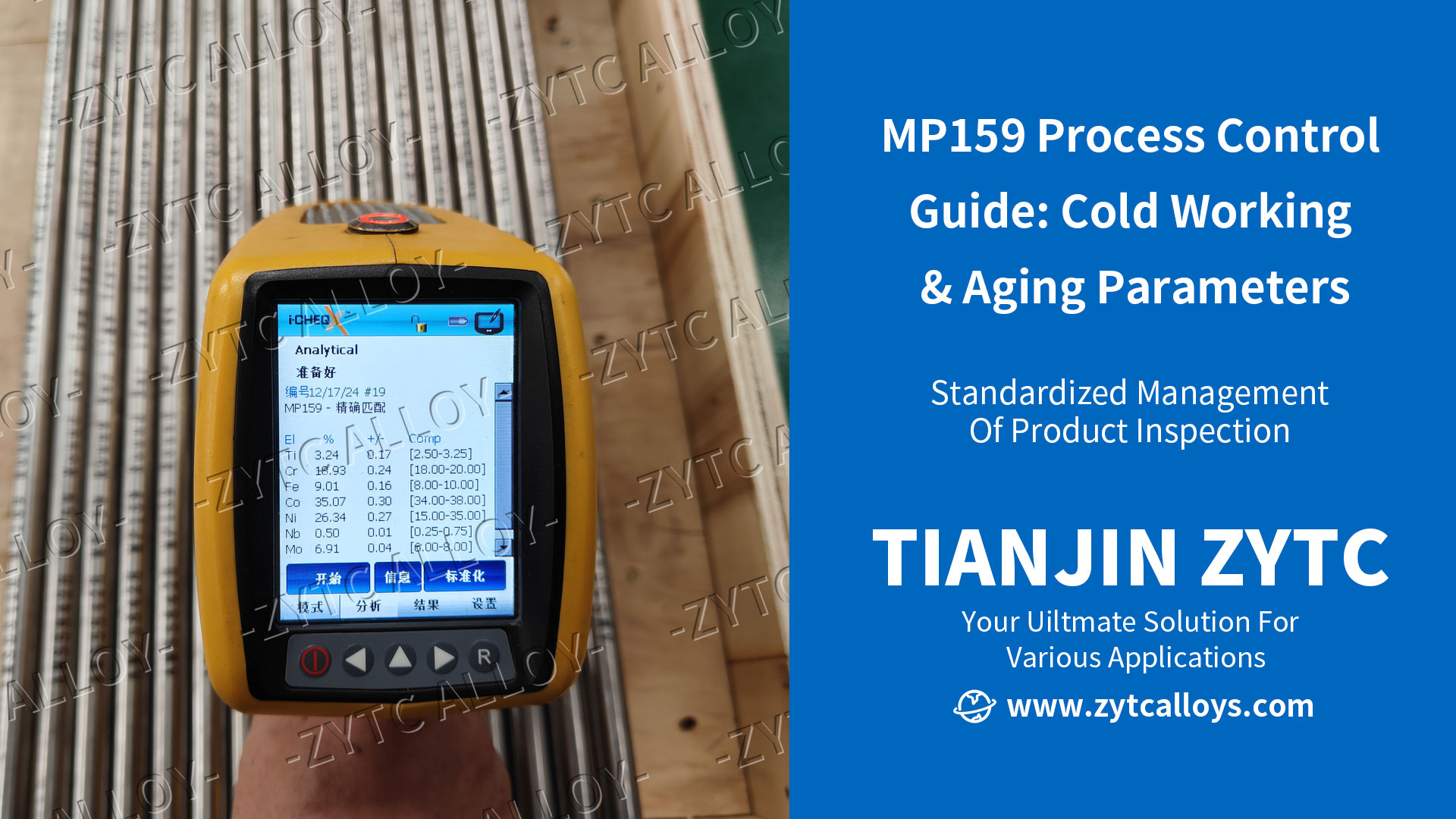
MP159 (UNS R30159) Engineering Process Control Guide: Cold Working & Aging Parameters
Related Article