ZYTC Inconel® 690 (UNS N06690) Nickel-Chromium-Iron Alloy I. Product Information - Material Name: Inconel® 690 Nickel-Chromium-Iron Alloy (UNS N06690)
- Material Definition: A nickel-chromium-iron alloy specifically engineered with high chromium content (approximately 29%)—among the highest of any nickel-based alloy commonly used for pressure equipment fabrication. This elevated chromium level provides superior resistance to oxidation, sulfidation, and nitridation.
- Core Value Proposition: Exceptional resistance to stress-corrosion cracking (SCC) in high-purity water and caustic environments, combined with outstanding high-temperature stability in oxidizing, sulfur-bearing, and nitrogen-bearing atmospheres.
- Key Metallurgical Advantages:
- High Chromium (27-31%): Forms a stable, protective chromium oxide layer
- Low Carbon (0.05% max): Minimizes carbide precipitation and maintains corrosion resistance
- Not Hardenable by Heat Treatment: Used in solution-annealed condition for optimal corrosion resistance and fabricability
- Superior SCC Resistance: Particularly in nuclear-grade high-purity water and caustic environments
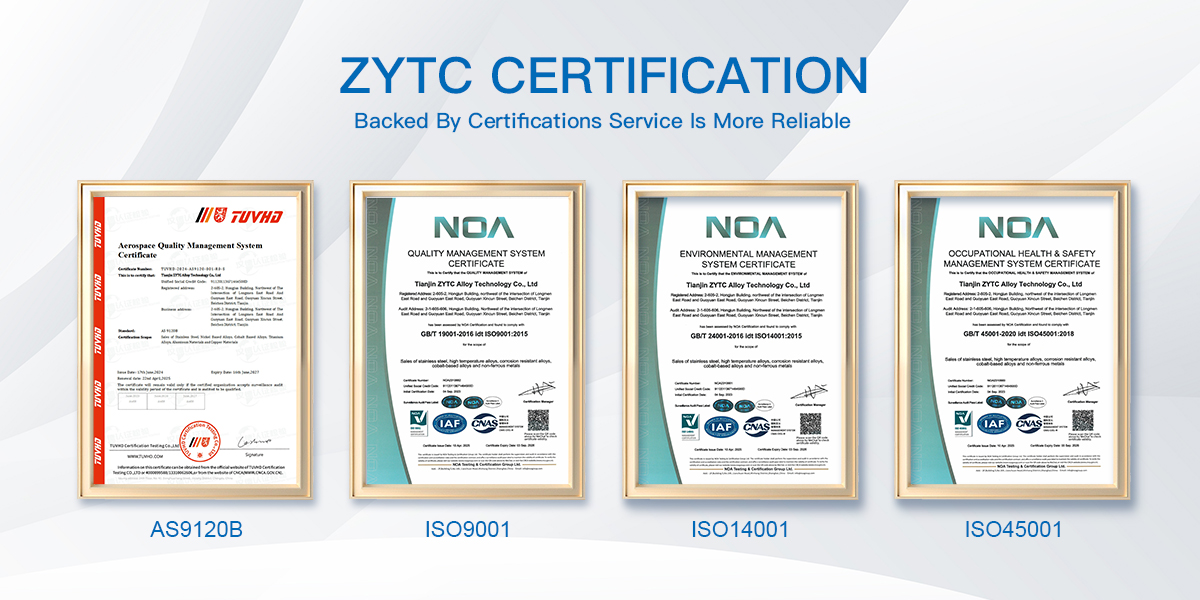
- Certification & Quality: ISO 9001 and AS9120 certified, ensuring full traceability and compliance.
- Product Forms Available from ZYTC:
- Bar & Rod | Plate, Sheet & Strip | Pipe & Tube (Seamless)
- Forgings | Wire | Custom Fabricated Components
II. Material Standards & SpecificationsProduct Form | ASTM Standard | Description | Bar and Rod | ASTM B166 | Standard specification for Ni-Cr-Fe alloy bar | Forgings | ASTM B564 | Standard specification for nickel alloy forgings | Plate, Sheet, Strip | ASTM B168 | Standard specification for Ni-Cr-Fe alloy plate/sheet/strip | Seamless Pipe & Tube | ASTM B163, ASTM B829 | Standard specification for seamless nickel alloy pipe/tube |
III. Chemical Composition (wt%)The defining characteristic of Inconel 690 is its high chromium content, which provides exceptional corrosion and oxidation resistance. Element | Ni | Cr | Fe | C | Mn | Si | S | Cu | Min | 58.0 | 27.0 | 7.0 | - | - | - | - | - | Max | - | 31.0 | 11.0 | 0.05 | 0.5 | 0.5 | 0.15 | 0.5 |
*Note: The combination of high chromium (27-31%) and low carbon (0.05% max) is critical for resistance to sensitization and stress-corrosion cracking.* IV. Service Conditions & Material Selection BoundariesSuitable Conditions (Why choose it?) - High-Purity Water Environments: Exceptional resistance to stress-corrosion cracking (SCC) in nuclear reactor coolant systems, steam generators, and associated piping.
- Caustic Environments: Outstanding performance in concentrated caustic solutions at elevated temperatures.
- Oxidizing High-Temperature Atmospheres: Superior resistance to oxidation due to stable chromium oxide layer formation.
- Sulfidizing and Nitriding Environments: High chromium content provides excellent resistance to sulfur and nitrogen compound attack at elevated temperatures.
- Mixed Acid Environments: Good performance in various high-temperature aqueous media with low corrosion rates.
Typical Applications: - Nuclear Power Systems: Steam generator tubing, core support structures, reactor internals, control rod drive mechanisms
- Thermal Waste Treatment: Incinerator components, radioactive waste vitrification equipment, coal gasification units
- Chemical Processing: Furnace components, baffles, burners for petrochemical processing; ducts and reheaters for sulfuric and nitric acid production
- Pollution Control: Tail-gas reheaters in nitric acid plants, flue gas handling equipment
Material Selection Boundaries (When to consider alternatives?) - Reducing Acid Environments: For strong reducing acids like hydrochloric, consider Inconel 625 or Hastelloy C-276
- Pitting/Crevice Corrosion: For environments requiring maximum resistance to localized corrosion, consider Inconel 625 or 686
- Extreme High-Temperature Creep (>1000°C): For applications requiring long-term creep resistance above 1000°C, consider Inconel 601 or 602 CA
- High-Strength Requirements: If higher mechanical strength is needed, consider precipitation-hardened alloys like Inconel 718
V. Manufacturing Process & Heat TreatmentHeat Treatment Process Parameters: Process | Objective | Typical Parameters | Outcome | Solution Annealing | Optimize corrosion resistance; recrystallize microstructure | 1040°C - 1230°C (1900°F - 2250°F) followed by rapid cooling | Fine-grained microstructure; maximum corrosion resistance |
Fabrication Guidelines: - Hot Working: Recommended temperature range: 1040°C - 1230°C (1900°F - 2250°F) for heavy forming. Light forming possible down to 870°C (1600°F). Avoid working in low-temperature range.
- Cold Working: Can be formed using conventional methods. Work-hardens rapidly; intermediate annealing may be required for severe deformation.
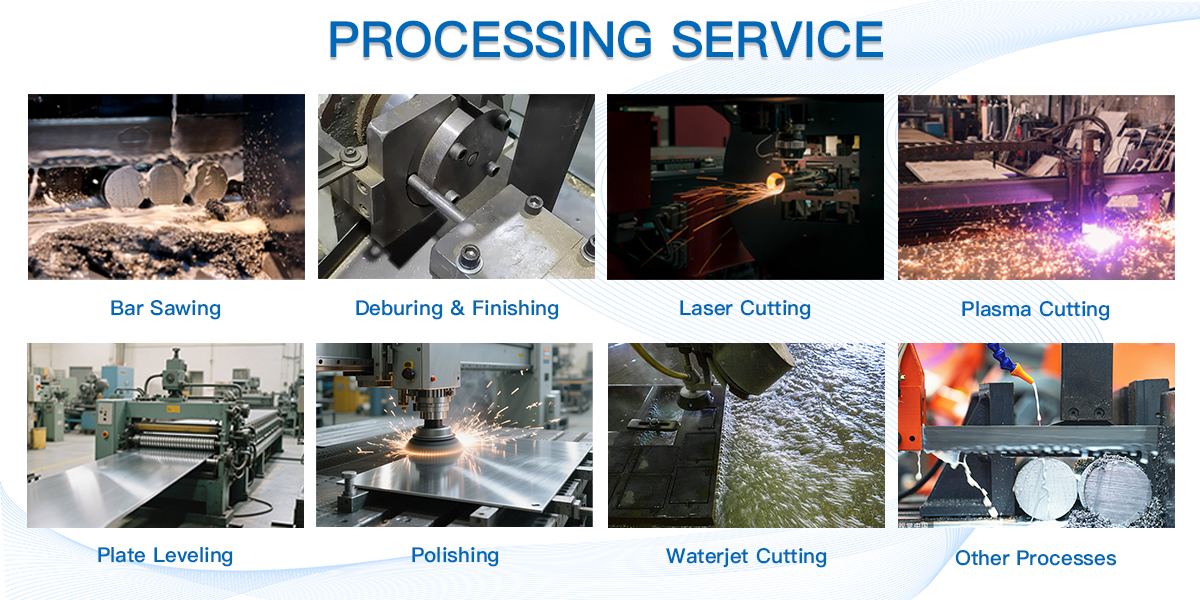
- Machining: Requires rigid tooling, positive feeds, and sharp cutting edges due to work-hardening characteristics. Similar to other nickel-based alloys.
- Welding: Excellent weldability using GTAW/TIG and SMAW/Stick processes. Use matching filler metals (ERNiCrFe-7) and electrodes (ENiCrFe-7) to maintain corrosion resistance in weld zone. No pre-heat generally required.
VI. Mechanical Properties (Typical Values)Property | Metric | Imperial | Tensile Strength | 724 MPa (min) | 105,000 psi (min) | Yield Strength (0.2% Offset) | 348 MPa (min) | 50,500 psi (min) | Elongation at Break | 41% (min) | 41% (min) | Modulus of Elasticity | 211 GPa | 30,600 ksi | Shear Modulus | 81.8 GPa | 11,900 ksi | Poisson's Ratio | 0.289 | 0.289 |
Note: Properties shown are for solution-annealed condition. Contact our technical team for certified test reports specific to your product form. VII. Material Comparison & Selection GuideThis comparison aids in selecting between Alloy 690 and other relevant alloys for nuclear and high-temperature applications. Dimension | Inconel 690 (N06690) | vs. Inconel 600 (N06600) | vs. Inconel 625 (N06625) | vs. 304/316 SS | Primary Strength | SCC Resistance + High-Temp Oxidation | General Purpose / Caustic Resistance | Strength + Aqueous Corrosion | Cost-Effective General Purpose | Chromium Content | 27-31% (Highest) | 14-17% | 20-23% | 18-22% | SCC Resistance in High-Purity Water | Superior | Good | Very Good | Poor | Oxidation Resistance (High Temp) | Excellent | Good | Very Good | Fair | Sulfidation/Nitridation Resistance | Excellent | Good | Very Good | Fair | Aqueous Corrosion Resistance | Good (Oxidizing) | Good | Excellent | Moderate | Typical Applications | Nuclear SG tubing, waste treatment, oxidizing chemical processes | Thermal processing, caustic handling, general high-temp | Marine, oil & gas (sour service), FGD, chemical processing | General corrosion, food processing, architectural |
Procurement Recommendation: - Choose Inconel 690 for nuclear steam generator tubing, high-purity water systems, and environments requiring exceptional SCC resistance combined with high-temperature oxidation resistance. Its high chromium content makes it the preferred choice for oxidizing, sulfidizing, and nitriding atmospheres.
- Choose Inconel 600 for a cost-effective solution for general high-temperature service and caustic environments where the extreme SCC resistance of 690 is not required.
- Choose Inconel 625 when you need a combination of high strength and exceptional resistance to both aqueous corrosion and high-temperature environments.
- Choose 304/316 Stainless Steel for cost-sensitive applications in less aggressive environments where the superior properties of nickel alloys are not justified.
Request a Quote or Sample Today: If your nuclear, chemical processing, or waste treatment applications demand the proven SCC resistance and high-temperature stability of Alloy 690, contact the ZYTC Alloy sales team today. We provide certified materials, technical expertise, and reliable global logistics. Contact us to request a free sample and a competitive quote. Our technical team is ready to assist with material selection and application support. Contact Us: Email:daisy@zytcsteel.com WhatsApp/WeChat: +86 17335753350 |