Sourcing L605 Cobalt Alloy: Metallurgy, Standards & Supplier Audits

In the spectrum of cobalt-based superalloys, the positioning of L605 (UNS R30605, also known as Haynes 25) is often misunderstood. Buyers habitually compare it side-by-side with other "high-temperature alloys," overlooking a fundamental fact: L605's strength does not come from age precipitation, but from a combination of solid-solution strengthening and work hardening. This fundamental difference dictates that its sourcing logic is entirely different from alloys like MP35N or Waspaloy.
Approaching from a metallurgical perspective, this article breaks down the decision nodes in L605 procurement that truly impact service performance, providing a practical technical evaluation framework.
Understanding the Strengthening Mechanism: Why L605 Has No "Aged" State
L605's chemical composition is based on cobalt, containing roughly 20% chromium, 15% tungsten, and 10% nickel. Tungsten and chromium act as substitutional solid-solution atoms in the face-centered cubic cobalt matrix, creating lattice distortion that increases strength. Meanwhile, M23C6 and M6C carbides distributed along the grain boundaries provide creep resistance at high temperatures. However, this mechanism cannot be "activated" or "enhanced" through subsequent aging treatments—L605 is not age-hardenable.
This means if a purchase specification lists an "aged" or "cold worked + aged" requirement, either the wrong grade is specified (perhaps MP35N was intended), or there is a fundamental misunderstanding of L605's strengthening path. L605's strength can only be adjusted through two means: the cooling rate after solution annealing, and the amount of cold work.
-
Solution Annealing: The standard window is 1177–1232°C, followed by rapid cooling (water quench or fast air cool). The cooling rate affects carbide morphology and distribution, which in turn impacts room-temperature ductility and high-temperature creep properties.
-
Cold Working: Can push the tensile strength from ~1000 MPa (annealed) up to the 1500 MPa range for wire. However, higher cold work reduces subsequent formability.
Sourcing Advice: Confirm whether your part requires subsequent cold forming or welding. If so, the annealed state (solution + rapid cool) is the only practical choice. If the part is near-final shape and only requires minor finishing, cold-drawn or cold-rolled states can provide higher strength.
The Standard System: AMS 5537/5759 vs. ASTM F90
L605 procurement specifications typically fall under two systems: the aerospace AMS series and the medical implant ASTM F90.
-
AMS 5537 / AMS 5759: Covers sheet, strip, bar, and forgings. The core constraints are the chemical composition window and room/elevated temperature mechanical properties, with specific requirements for ultrasonic testing and grain size. Suitable for gas turbine combustor components and afterburner assemblies.
-
ASTM F90: Designed for surgical implants. It allows supply in either the annealed or cold-worked condition, but microcleanliness is the key testing item that distinguishes medical applications from aerospace applications—inclusion levels directly impact the fatigue life and biocompatibility of implants.
A common procurement mistake is using an AMS certificate to satisfy a medical client's audit requirements, or vice versa. Clarifying the end application and required standard at the inquiry stage prevents the awkwardness of discovering a certificate is "missing items" upon delivery.
 |
 |
 |
The Underestimated Failure Mode: Intermediate-Temperature Embrittlement
L605's most easily overlooked performance weakness is not at room temperature, nor at continuous high temperatures, but during prolonged exposure to intermediate temperatures (approximately 760–925°C). In this window, L605 experiences a significant drop in room-temperature ductility (due to the tendency to precipitate harmful Laves phases). For applications like gas turbine combustor components or industrial furnace fixtures that may experience intermediate temperature holds during start/stop cycles, this phenomenon directly relates to maintenance intervals and failure risk.
If a buyer only checks room-temperature tensile data when evaluating a supplier, this risk will be missed. A more practical approach is to require the supplier to provide room-temperature ductility data after simulated intermediate-temperature exposure for the same batch of material, or at least confirm that its hot working and heat treatment history avoided unnecessary holds in this temperature range.
Supplier Audits: Three Things More Important Than Price
In the Chinese cobalt alloy supply chain, L605 capabilities vary widely. Some traders quote "from stock" without being able to trace the melt number or hot working batch. For a material with a high total lifecycle cost like L605, traceability and process transparency are far more important than unit price.
1. Is the melting route clear and verifiable?
L605's carbon content window (0.05–0.15%) is relatively wide, but carbide morphology and distribution significantly affect final performance. High-quality L605 is typically produced via VIM or VIM+VAR routes. Purchase orders should require the certificate to state the melting method, not just "vacuum melted."
2. Are hot working and solution annealing closed-loop under the same quality system?
L605's solution annealing temperature window is narrow, and the cooling rate is sensitive to carbide precipitation behavior. If melting, forging/rolling, and heat treatment are dispersed among multiple subcontractors, there is often a lack of internal verification capability when process parameters need to be adjusted.
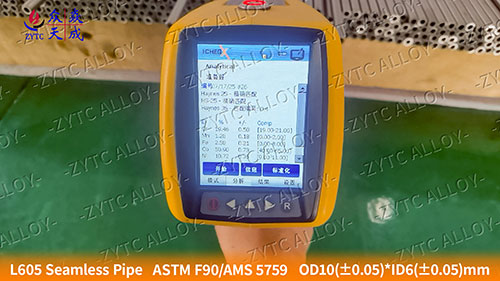
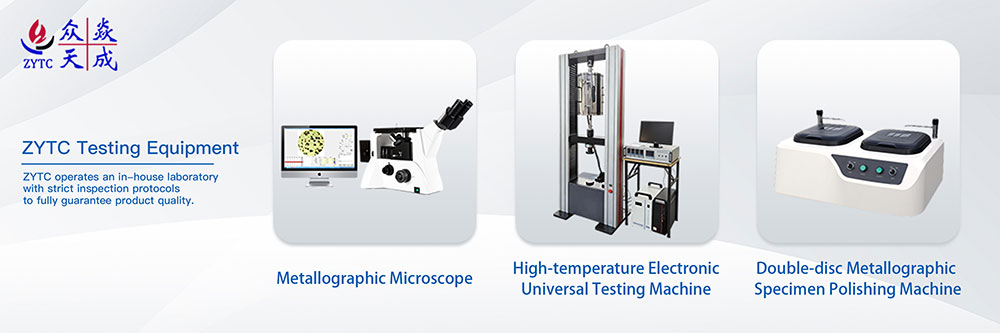
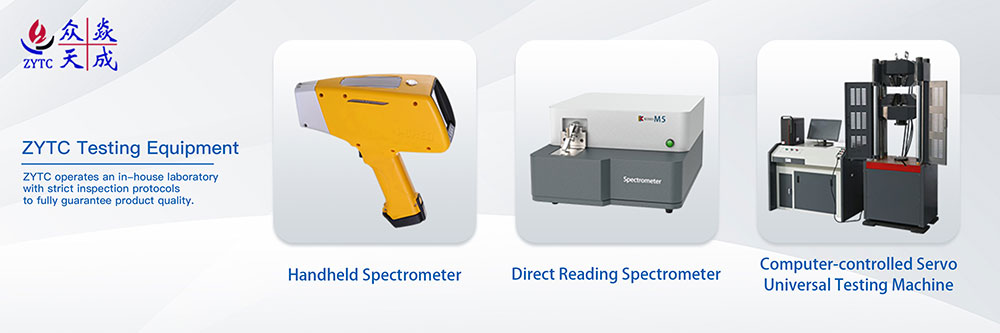
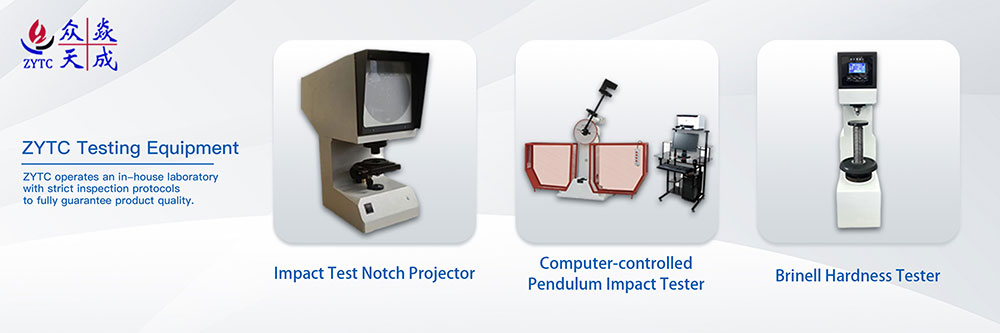
At this stage, the supplier's laboratory capability is critical. For instance, a Direct Reading Spectrometer can quickly verify major elements and key impurities (especially carbon window control), a Metallurgical Microscope evaluates grain size and carbide distribution; and an Electronic High-Temperature Universal Testing Machine verifies strength retention at simulated service temperatures. The value of these equipment combinations is not just "having them," but their ability to provide batch-level rapid verification for heat-history-sensitive materials like L605.
3. Willingness to support small batches and prototype orders.
Typical L605 applications (such as aerospace engine MRO replacement parts or medical stent prototypes) often start with small trial runs. Whether the supplier is flexible on MOQ and can provide the same material state and test reports for prototype orders as for mass production is the litmus test of their engineering support capability.
Comprehensive Decision Checklist
Before finalizing an L605 supplier, include these items in your technical review:
| Review Item | Key Confirmation | Why It Matters |
|---|---|---|
| Strengthening Mechanism | Confirm the supplier understands L605 is solid-solution + work-hardened, not age-hardenable. | Avoid specification errors or material selection mistakes. |
| Delivery State | Specify annealed, cold-drawn, or cold-rolled. Request actual mechanical test values for the batch. | Determines subsequent formability and final strength. |
| Applicable Standards | AMS 5537/5759 (aerospace) or ASTM F90 (medical). Confirm all testing items are covered. | Basic threshold for industry entry and client audits. |
| Melting & Thermal History | Specify VIM or VIM+VAR route; confirm solution temperature and cooling method. | Carbide morphology and intermediate-temperature embrittlement risk. |
| Testing Capability | Does the supplier have in-house capabilities for spectrometer, metallurgy, and mechanical testing? | Reflects the closed-loop degree of batch-level quality control. |
| Traceability | One-to-one correspondence between melt number, process batch, heat treatment batch, and test report. | Critical for root cause analysis when anomalies occur. |
Sourcing L605 is essentially about finding the balance between high-temperature strength, formability, and intermediate-temperature toughness that matches your specific application. Its strengthening mechanism dictates that there is no "one-size-fits-all" state option—only precise control over every link in the process chain.
Since 1989, ZYTC Alloy has been deeply engaged in the specialty alloy supply chain. Our value does not lie in claiming to cover every grade, but in integrating melting control, hot working experience, and testing verification into a traceable, communicative technical interface. When your next L605 part needs to meet both aerospace-grade cleanliness and medical-grade purity, an in-house lab equipped with a Direct Reading Spectrometer, Metallurgical Microscope, and High-Temperature Universal Testing Machine is a much better risk mitigation than a low-price quote.
📥 Request Technical Data or a Sample:
For specific L605 mechanical properties or to request prototype samples, please contact our technical team.
📧 Email: daisy@zytcsteel.com
📱 WhatsApp/WeChat: +86 17335753350
China Cobalt Alloy Supply Chain Report 2026: How to Choose the Right Supplier
Sourcing MP35N Cobalt Alloy: A Technical Guide to Material States and Supplier Audits
Related Article