Alloy 903 (UNS N19903) is a precipitation-hardenable nickel-iron-cobalt alloy engineered for applications demanding controlled thermal expansion and high strength. Through precise additions of niobium, titanium, and aluminum, this alloy achieves a uniquely low coefficient of thermal expansion while maintaining tensile strengths exceeding 1300 MPa, making it essential for tight-clearance rotating machinery and precision assemblies .
1. Product Specifications & Physical DataZYTC Alloy supplies UNS N19903 in mill forms suitable for aerospace gas turbine components and precision industrial equipment requiring certified low-expansion properties. Available Forms: Round bar, flat bar, rod, wire, welding wire, sheet, plate, strip, and forging stock . Specifications: AMS 5666 (bar/forgings), AMS 5599 (sheet/strip/plate), AMS 5837 (welding wire), UNS N19903 .
| Chemical Composition (Weight %) | Alloy 903 Specification |
|---|
| Nickel (Ni) | 36.0 - 40.0 | | Iron (Fe) | Balance (approx. 42% nominal) | | Cobalt (Co) | 13.0 - 17.0 | | Niobium (Nb) | 2.40 - 3.50 | | Titanium (Ti) | 1.00 - 1.85 | | Aluminum (Al) | 0.30 - 1.15 | | Chromium (Cr) | < 0.5 (residual) |
Note: This alloy contains minimal chromium; oxidation protection may require coatings above 650°C . | Physical Properties | Metric | Imperial |
|---|
| Density | 8.25 g/cm³ | 0.298 lb/in³ | | Melting Range | 1318 - 1393°C | 2405 - 2539°F | | Thermal Expansion (25-427°C) | 7.2 µm/m·°C | 4.0 µin/in·°F | | Thermal Conductivity | 16.7 W/m·K | 116 BTU·in/hr·ft²·°F | | Curie Temperature | 415 - 470°C | 780 - 880°F |
| Mechanical Properties (Precipitation Hardened) | Metric | Imperial |
|---|
| Tensile Strength | 1310 MPa | 190,000 psi | | Yield Strength (0.2% offset) | 1100 MPa | 160,000 psi | | Elongation at Break | 14% | 14% | | Elastic Modulus (@ 0°C) | 146.8 GPa | 21,290 ksi | | Poisson's Ratio (@ 250°C) | 0.226 | 0.226 |
2. Operating Conditions & Selection CriteriaIncoloy® 903 is specified when conventional superalloys cannot meet dimensional stability requirements in components operating within tight clearances. Its controlled expansion characteristics derive from magnetic property optimization below the Curie temperature . Service Temperature Range: Optimized for continuous operation up to 650°C (1200°F). Above this range, expansion characteristics change as the alloy passes through its Curie temperature . Low-Expansion Performance: Coefficient of thermal expansion approximately 50% that of Inconel 718, enabling tighter clearances in turbine casings and seals . Strength Retention: Maintains yield strength above 1000 MPa at 540°C (1000°F); 100-hour rupture strength at 650°C is approximately 586 MPa . Oxidation Limitation: Minimal chromium content results in poor oxidation resistance above 650°C. Protective coatings recommended for extended service in oxidizing atmospheres . Microstructural Stability: Precipitation-hardened structure (γ' and γ'' phases) remains stable within design temperature range; over-aging occurs with prolonged exposure above 650°C.
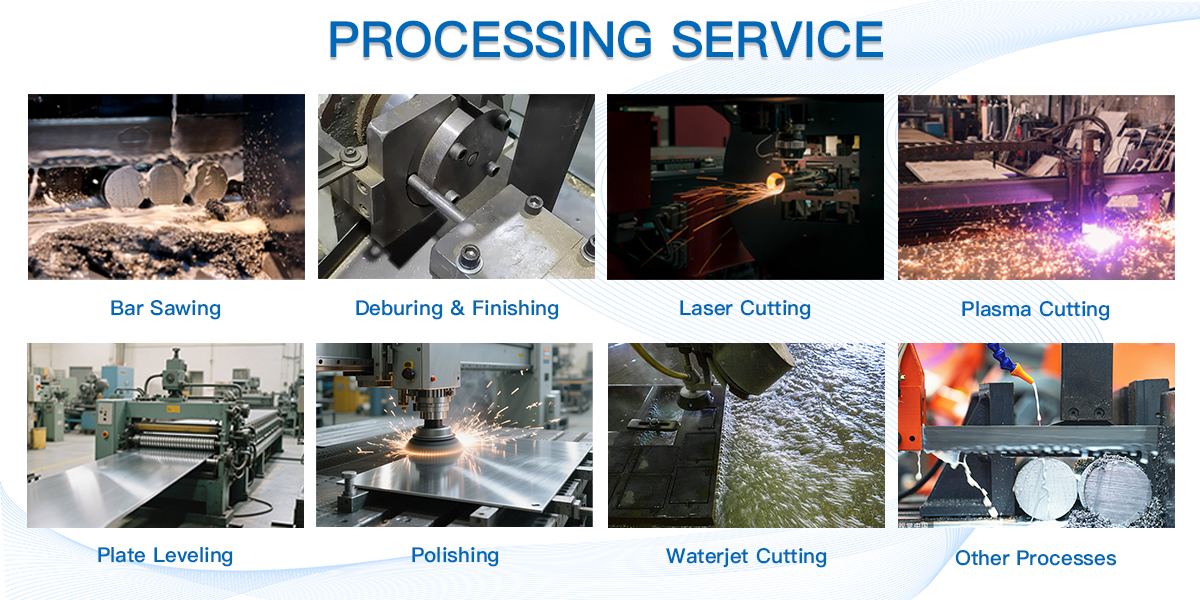
3. Fabrication & Material ComparisonAlloy 903 (UNS N19903) requires careful thermal processing to develop the precipitate structure responsible for both its strength and low-expansion characteristics. Fabrication typically performed in solution-annealed condition. Machining: Best performed in solution-treated condition before aging. Carbide tooling recommended with positive rake angles. Work-hardening rate moderate; rigid setups required for precision tolerances . Welding: Weldable using GTAW, GMAW, SMAW, and submerged-arc processes. Matching filler metal (AMS 5803) required. Note: Alloy 903 exhibits greater crack susceptibility compared to similar low-expansion alloys; crack initiation strain approximately 0.25% in Varestraint testing. Pre-weld cleaning essential; interpass temperature control critical . Forming & Heat Treatment: Hot Working Range: 983-1205°C (1800-2200°F) Full Heat Treatment Sequence (required for specified properties): Solution Anneal: 844°C (1550°F) × 1 hour, water quench First Age: 719°C (1325°F) × 8 hours, furnace cool Second Age: 622°C (1150°F) × 8 hours, air cool
Cold Working: Standard tooling acceptable; soft die materials (bronze, zinc alloys) recommended to minimize galling. Heavy lubricants required during cold forming .
Material Comparison: vs. Inconel 718: Comparable strength with 50% lower thermal expansion; preferred for casing and seal applications where clearances critical. Limited to lower maximum service temperature due to oxidation constraints . vs. Kovar: Higher strength through precipitation hardening; replaces Kovar where mechanical loading exceeds capability of Fe-Ni-Co sealing alloys . vs. Alloy 909 (successor grade): 903 represents first-generation low-expansion superalloy; 909 offers improved oxidation resistance through silicon additions and better long-term durability .
Applications Gas turbine casings, rings, and seals Rocket engine thrust chambers High-temperature springs and fasteners Turbine shrouds and containment rings Steam turbine bolts Precision instrument components requiring dimensional stability Ordnance hardware
Contact ZYTC Alloy for certified alloy 903 materials with complete traceability, AMS specifications, technical datasheets, and competitive pricing on standard sizes or custom-forged components. Email:daisy@zytcsteel.com WhatsApp/WeChat: +86 17335753350 |