Alloy 801 (UNS N08801) - High-temperature alloy with exceptional polythionic acid resistance & enhanced strength. Ideal for aerospace, nuclear reactors & gas turbines. ZYTC supplies bars, plates, tubes & forgings. Request technical data & quote.
Delivery :
FOB
minimum order :
50 kilograms
Supply Ability :
5000kilograms / Month
Stock Time :
7-10Day
Country of Origin :
CHINA
Quantity :
add to cart
Contact Now
Alloy 801 (UNS N08801) is a modified version of Alloy 800 with controlled titanium addition exceeding 1.0%. This stabilization makes the alloy specifically resistant to intergranular stress corrosion cracking in polythionic acid environments, a common concern in petrochemical desulfurization service. The alloy combines high-temperature strength with targeted corrosion resistance for critical processing equipment.
1. Product Specifications & Physical Data
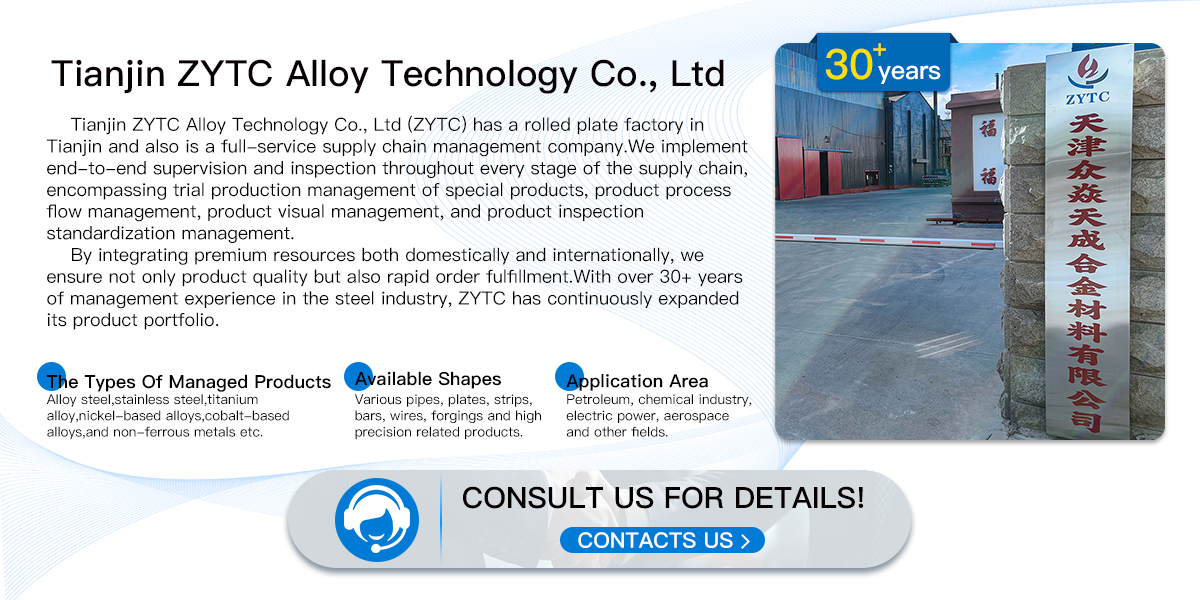
ZYTC Alloy supplies UNS N08801 in mill forms suitable for fabricators serving the petrochemical, aerospace, and energy conversion sectors.
Available Forms: Round bar, flat bar, rod, plate, sheet, strip, seamless/welded tube, forging stock, custom shapes, and welding wire.
Specifications: AMS 5552, ASTM B163, ASTM B407 .
Chemical Composition (Weight %)
Alloy 801 Specification
Nickel (Ni)
30.0 - 34.0
Chromium (Cr)
19.0 - 22.0
Iron (Fe)
Balance (approx. 45%)
Titanium (Ti)
0.75 - 1.50
Carbon (C)
≤ 0.10
Manganese (Mn)
≤ 1.50
Silicon (Si)
≤ 1.0
Copper (Cu)
≤ 0.50
Sulfur (S)
≤ 0.015
Note: Composition ranges vary slightly across specifications; values shown represent common industry standards .
Physical Properties
Metric
Imperial
Density
7.94 - 8.0 g/cm³
0.287 - 0.289 lb/in³
Melting Range
1355 - 1400°C
2471 - 2552°F
Mechanical Properties
Metric
Imperial
Tensile Strength (min.)
1160 MPa
168,000 psi
Yield Strength (min.)
1035 MPa
150,000 psi
Elongation (min.)
15%
15%
*Note: High-strength properties shown are typical for wire in tempered condition; annealed tube properties are lower per ASTM B407 .*
2. Operating Conditions & Selection Criteria
Alloy 801 (UNS N08801) is specified when standard 800 series alloys risk intergranular attack in sulfur-bearing process environments. The titanium stabilization prevents chromium carbide precipitation at grain boundaries, maintaining corrosion resistance after welding or high-temperature exposure .
Service Temperature Range: Effective up to 870°C (1600°F) for oxidation resistance; optimized for 600-700°C (1112-1292°F) creep service .
Polythionic Acid Resistance: Titanium stabilization prevents chromium depletion at grain boundaries, eliminating susceptibility to intergranular stress corrosion cracking in refineries processing sulfur-bearing feedstocks .
Oxidation Resistance: Forms protective chromium oxide scale; resists scaling in air and combustion atmospheres up to 900°C (1652°F) .
Creep Strength: Elevated titanium content improves tensile and rupture properties compared to Alloy 800; 100-hour rupture strength at 650°C is 250 MPa .
3. Fabrication & Material Comparison
While similar to Alloy 800 in basic fabricability, the titanium addition requires attention to welding practices to avoid nitride formation or hot cracking.
Machining: Work-hardens during cutting; machinability rating approximately 50% of B1112 steel. Carbide tooling recommended with positive rake angles. Water-based coolants for high-speed operations; heavy lubricants for drilling and tapping .
Welding: Good weldability using GTAW, SMAW, GMAW. Matching filler metals (ERNiCr-3 type) recommended. Titanium addition may increase sensitivity to hot cracking; proper pre-weld cleaning and controlled heat input essential .
Forming & Heat Treatment:
Hot Working: 1050-1150°C (1922-2102°F)
Annealing: 1093°C (2000°F) followed by rapid cooling
Cold Working: Responds to conventional methods; soft tooling recommended to minimize galling .
Material Comparison:
vs. Alloy 800: Higher titanium content (≥1.1% vs. 0.15-0.60%) provides superior resistance to polythionic acid stress corrosion cracking; preferred for hydrodesulfurizer service .
vs. 321 Stainless: Higher nickel content (32% vs. 9-12%) offers better resistance to chloride stress corrosion cracking and high-temperature stability.
vs. Alloy 825: Lower molybdenum content; more cost-effective where reducing acid resistance not required.
Applications
Petrochemical hydrodesulfurizer components
Catalytic reforming units
High-temperature process piping
Aerospace rocket motor components
Nuclear reactor internals
Gas turbine combustion chambers and transition pieces
Industrial furnace fixtures
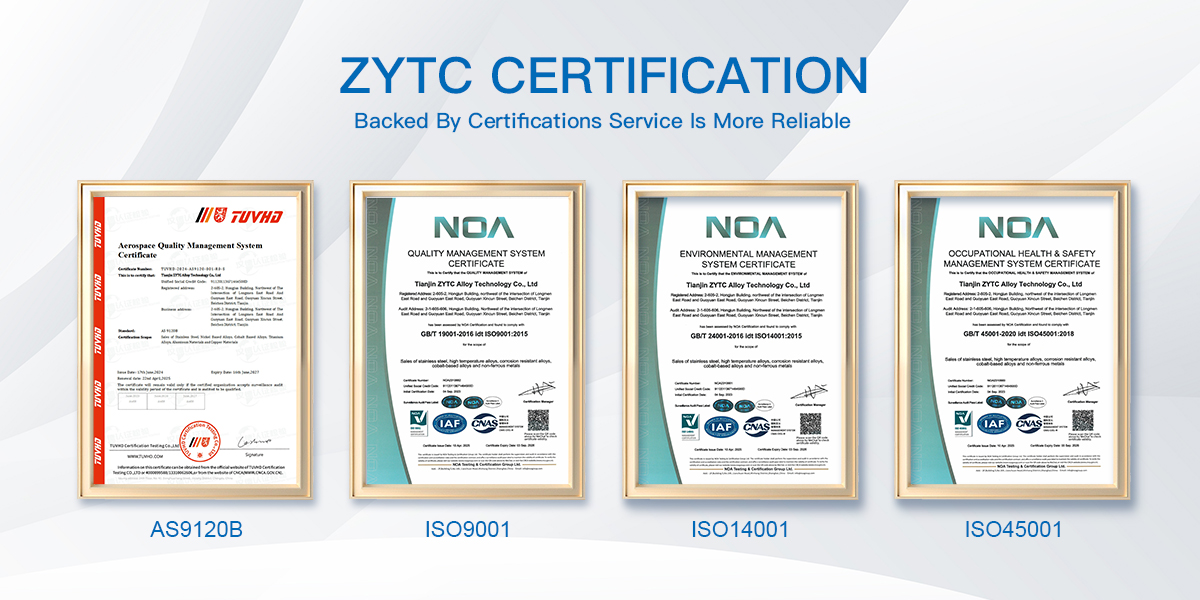
Contact ZYTC Alloy for certified alloy 801 materials with complete traceability, technical datasheets, and competitive pricing on standard sizes or custom-fabricated components.