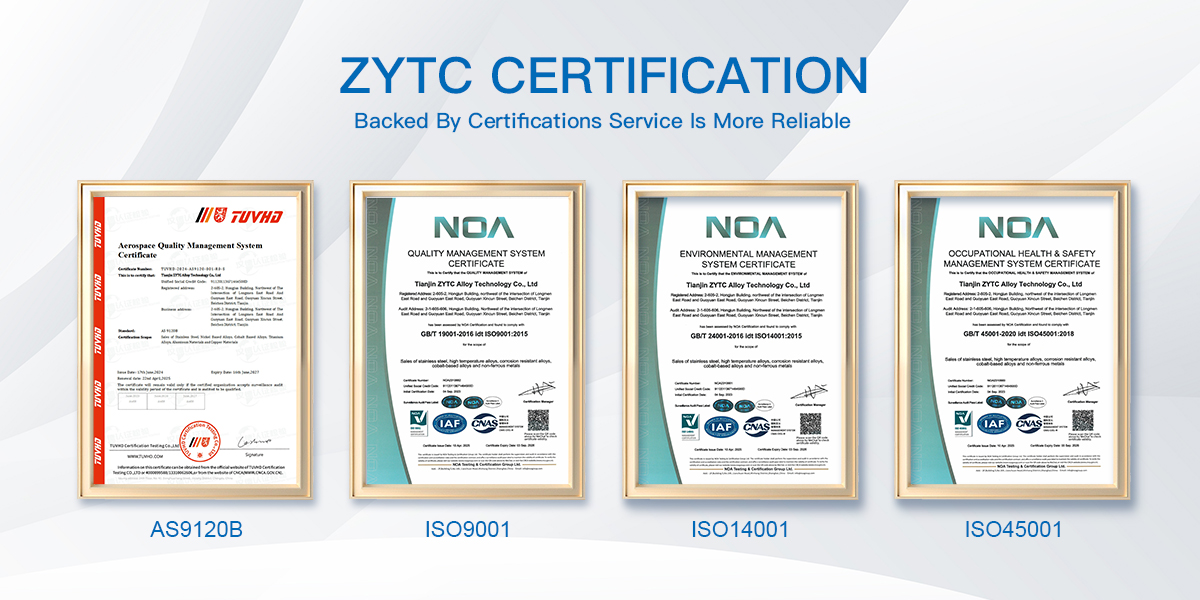
Alloy 263 (UNS N07263 / 2.4650) is a nickel-cobalt superalloy offering excellent formability & aged strength up to 800°C. Ideal for gas turbine components with superior weldability vs Waspaloy. Available in sheet, bar & forgings. ISO-certified supplier. Request specs.
Delivery :
FOB
minimum order :
50 kilograms
Supply Ability :
5000kilograms / Month
Stock Time :
7-10Day
Country of Origin :
CHINA
Quantity :
add to cart
Contact Now
Alloy 263 (UNS N07263 / 2.4650) is a precipitation-hardenable nickel-cobalt-chromium-molybdenum superalloy developed to provide an optimal combination of fabricability and high-temperature mechanical properties. Its relatively low titanium content (2.4% max) minimizes strain-age cracking susceptibility while maintaining excellent creep strength up to 900°C (1650°F), making it a preferred material for complex welded fabrications in aerospace and power generation applications .
1. Product Specifications & Physical Data
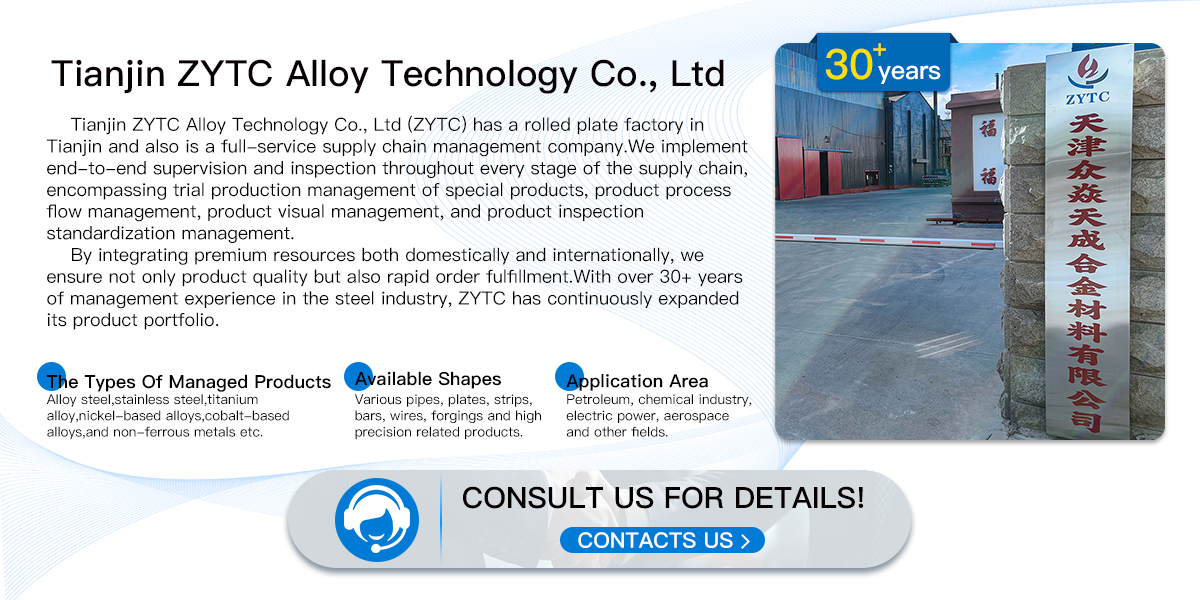
ZYTC Alloy supplies UNS N07263 in mill forms suitable for combustion chambers, transition ducts, and turbine casings requiring certified high-temperature properties and complete material traceability.
Available Forms: Sheet, strip, plate, bar, billet, forging stock, wire, and welding products .
Alloy 263 (UNS N07263 / 2.4650) is specified when designers require the creep strength of high-performance superalloys combined with the weldability needed for complex sheet metal fabrications .
Service Temperature Range: Optimized for continuous operation from 650°C to 900°C (1200-1650°F) .
Creep-Rupture Strength: 1000-hour rupture strength at 750°C is 280 MPa (41 ksi); at 870°C, 65 MPa (9.5 ksi) .
Microstructural Stability: Excellent long-term stability with minimal sigma phase formation during extended thermal exposure .
Strain-Age Cracking Resistance: Lower titanium content (1.9-2.4%) compared to alloys such as Waspaloy or R-41 significantly reduces susceptibility to strain-age cracking during post-weld heat treatment .
Oxidation Resistance: Good resistance to oxidation in gas turbine combustion atmospheres; suitable for components up to 1000°C in mildly oxidizing conditions .
Weldability: Among the most weldable of the high-strength, age-hardenable superalloys; widely used for complex fabricated structures requiring post-weld aging .
3. Fabrication & Material Comparison
Alloy 263 was specifically designed to overcome the fabricability limitations of earlier high-creep-strength alloys while maintaining comparable performance.
Heat Treatment :
Solution Annealing (Extrusions/Forgings): 1150°C (2100°F) × 1.5-2.5 hours, water quench
Aging (All Forms): 800°C (1470°F) × 8 hours, air cool
Welding: Excellent weldability using GTAW, GMAW, SMAW, and resistance welding. Matching filler metal required. Post-weld aging restores parent metal properties; strain-age cracking resistance superior to higher-titanium alloys .
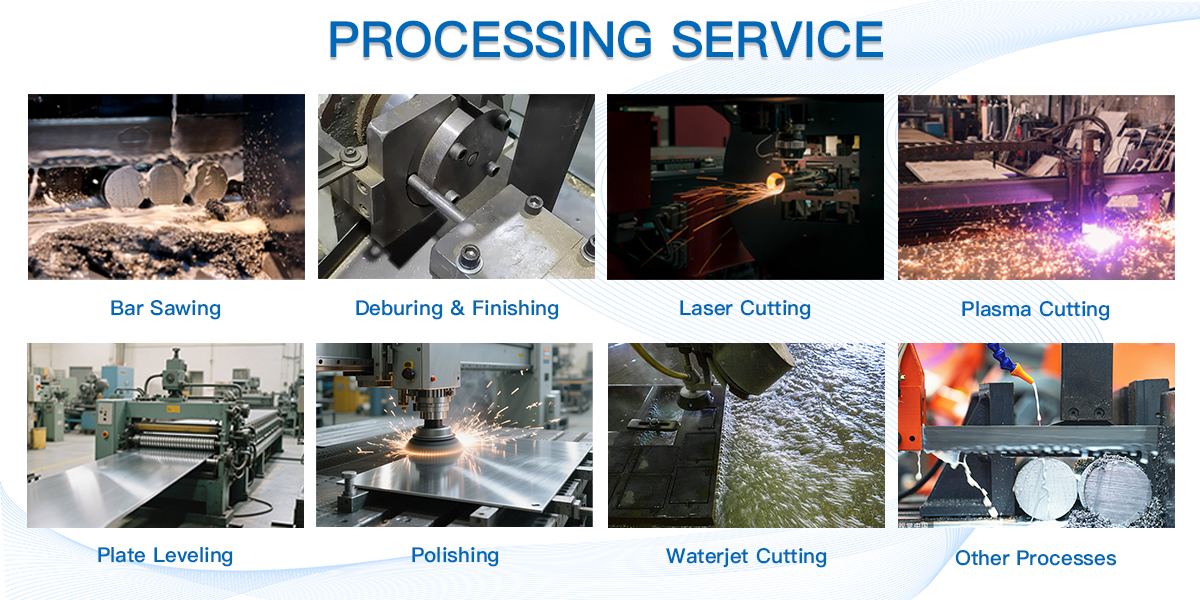
Forming: Good ductility in solution-annealed condition permits complex forming operations prior to aging. Hot forming preferred for severe deformation; cold forming with intermediate anneals possible .
Machining: Machinability similar to other age-hardenable superalloys in solution-treated condition; carbide tooling recommended with positive rake angles; water-based coolants for high-speed operations .
Industrial: Heat treating fixtures, high-temperature springs, furnace components
Contact ZYTC Alloy for certified Alloy 263 (UNS N07263 / 2.4650) materials with complete traceability, AMS/BS specifications, technical datasheets, and competitive pricing on standard sizes or custom-fabricated components.