Based in China, ZYTC Alloy supplies Hastelloy® S (UNS N06635) for high-temperature applications requiring exceptional thermal stability, low thermal expansion, and resistance to thermal fatigue. The alloy is specifically designed for cyclic service conditions up to 1093°C (2000°F). 1. Product Specifications & PropertiesHastelloy® S is a nickel-chromium-molybdenum alloy with controlled additions of silicon, aluminum, and lanthanum. The chemistry is optimized to provide low thermal expansion, excellent oxidation resistance, and retained ductility after long-term high-temperature exposure. Chemical Composition (%, range)| Element | Content |
|---|
| Nickel, Ni | 67 (balance) | | Chromium, Cr | 14.5-17.0 | | Molybdenum, Mo | 14.0-16.5 | | Iron, Fe | 3.0 max | | Cobalt, Co | 2.0 max | | Silicon, Si | 0.20-0.75 | | Manganese, Mn | 0.30-1.0 | | Aluminum, Al | 0.10-0.50 | | Carbon, C | 0.020 max | | Lanthanum, La | 0.010-0.10 |
Physical & Mechanical Properties| Property | Metric | Imperial |
|---|
| Density | 8.75 g/cm³ | 0.316 lb/in³ | | Melting Point | 1360°C | 2480°F | | Elastic Modulus | 212 GPa | 30,700 ksi | | Tensile Strength (at 1093°C) | 110 MPa | 16,000 psi | | Yield Strength (at 1093°C) | 52 MPa | 7,540 psi | | Elongation (at 982°C) | 46% | 46% | | Charpy Impact (V-Notch) | 190 J | 140 ft-lb |
2. Operating Conditions & Selection GuidelinesIdeal Media: Designed for high-temperature oxidizing environments and thermal cycling conditions. Excellent resistance to oxidation up to 1093°C (2000°F) in air. Suitable for applications requiring dimensional stability under temperature fluctuations Critical Advantage: Low coefficient of thermal expansion minimizes thermal stress during cycling. Retains ductility and toughness after prolonged high-temperature exposure without embrittlement. Lanthanum addition enhances oxidation resistance Temperature Range: Continuous service up to 1093°C (2000°F). Maintains mechanical integrity across the full temperature range typical of gas turbine and cyclic thermal applications Common Applications: Gas turbine seal rings, combustor components, transition ducts, bellows, thermal cyclers, and other components subject to repeated thermal stress and high-temperature oxidation
3. Fabrication & Material ComparisonHeat Treatment: Supplied in solution-annealed condition, ready for fabrication and service. Solution annealing temperature and quenching method available upon request Welding Considerations: Good weldability using GTAW/TIG and GMAW methods. Maintains properties in welded areas when proper procedures are followed. Suitable filler materials available Forming Characteristics: Good formability using conventional methods. Responds well to both hot and cold forming operations Machining: Compatible with standard machining techniques for nickel-based superalloys. Appropriate tooling and speeds recommended Versus Other High-Temperature Alloys: Lower thermal expansion than many nickel-based superalloys, reducing thermal fatigue in cyclic service. Better retained ductility after aging compared to precipitation-strengthened alternatives. Superior oxidation resistance due to lanthanum addition Versus Stainless Steels: Dramatically higher temperature capability and thermal fatigue resistance. Maintains strength and oxidation resistance where stainless steels would rapidly degrade Product Forms: Available in solution-annealed condition as plate, sheet, bar, rod, tube, pipe, wire, strip, and forgings
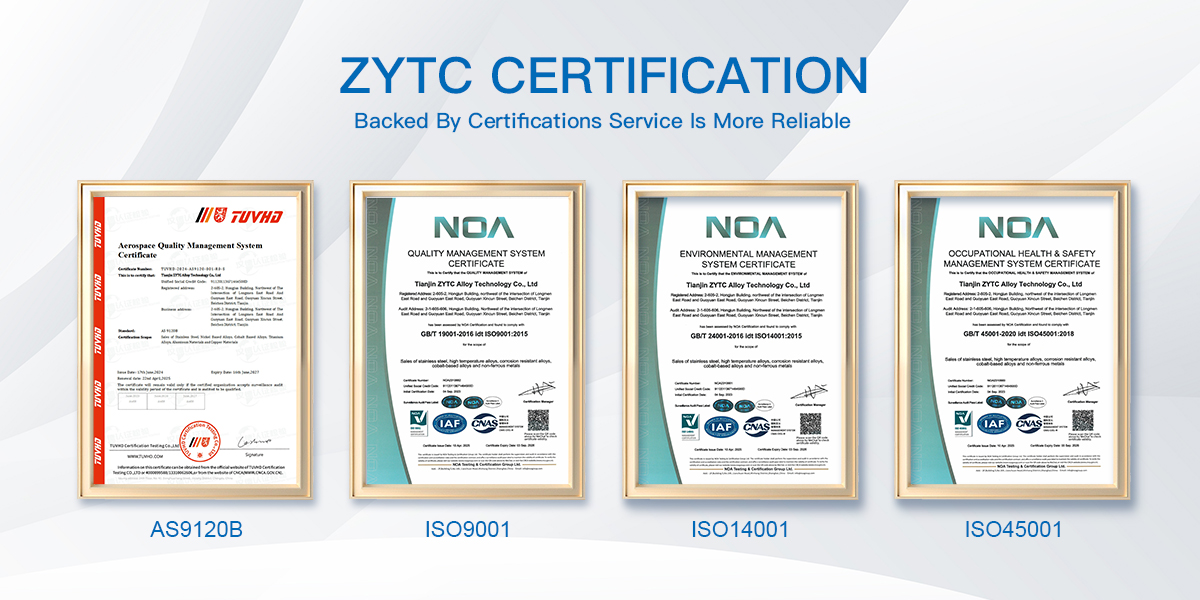
Contact ZYTC Alloy for application engineering support or to request a quotation. Our technical team can assist with material selection for high-temperature cyclic applications. ISO 9001 and AS9120 certified supplier. Request free samples and technical specifications with material certifications. Contact Us:Email:daisy@zytcsteel.com WhatsApp/WeChat: +86 17335753350 |