Alloy 230 (UNS N06230 / 2.4733) offers exceptional high-temperature strength & oxidation resistance to 2100°F. Ideal for aerospace, industrial heating & power generation applications. ZYTC supplies certified 230 alloy plate, bar & sheet. Request a quote!
Delivery :
FOB
minimum order :
50 kilograms
Supply Ability :
5000kilograms / Month
Stock Time :
7-10Day
Country of Origin :
CHINA
Quantity :
add to cart
Contact Now
Alloy 230 (UNS N06230 / 2.4733) is a nickel-chromium-tungsten-molybdenum alloy engineered for the most demanding high-temperature applications. Its unique combination of solid-solution strengthening, exceptional oxidation resistance, and long-term thermal stability makes it a premier material for aerospace combustion components, power generation equipment, and industrial heating systems operating up to 1149°C (2100°F) .
1. Product Specifications & Physical Data
ZYTC Alloy supplies UNS N06230 in comprehensive mill forms suitable for critical applications requiring verified high-temperature properties and complete material traceability.
Available Forms: Plate, sheet, strip, foil, billet, bar, wire, forging stock, pipe, tube, and welding products.
Specifications: ASTM B435, AMS 5878 (sheet/strip), AMS 5891 (bar), UNS N06230, DIN 2.4733 .
Chemical Composition (Weight %)
Haynes® 230 Specification
Nickel (Ni)
Balance (approx. 57% min.)
Chromium (Cr)
20.0 - 24.0
Tungsten (W)
13.0 - 15.0
Molybdenum (Mo)
1.0 - 3.0
Iron (Fe)
≤ 3.0
Cobalt (Co)
≤ 5.0
Manganese (Mn)
0.30 - 1.0
Silicon (Si)
0.25 - 0.75
Carbon (C)
0.05 - 0.15
Aluminum (Al)
0.20 - 0.50
Lanthanum (La)
0.005 - 0.05
Physical Properties
Metric
Imperial
Density
8.97 g/cm³
0.324 lb/in³
Melting Range
1301 - 1377°C
2374 - 2511°F
Thermal Conductivity (RT)
8.9 W/m·K
62 BTU·in/hr·ft²·°F
Modulus of Elasticity (RT)
211 GPa
30.6 × 10⁶ psi
Electrical Resistivity
125 µΩ·cm
49.2 µΩ·in
Mechanical Properties (Solution Annealed Plate)
Metric
Imperial
Tensile Strength (RT)
860 MPa
125 ksi
Yield Strength (RT, 0.2% offset)
395 MPa
57 ksi
Elongation (RT)
50%
50%
Tensile Strength (760°C/1400°F)
605 MPa
88 ksi
Tensile Strength (980°C/1800°F)
240 MPa
35 ksi
2. Operating Conditions & Selection Boundaries
This material is specified when components must survive prolonged exposure to combustion environments while maintaining structural integrity. Its value is in thermal stability and resistance to degradation.
Temperature Range: Suitable for continuous service from cryogenic temperatures up to 2100°F (1150°C). Retains useful strength beyond the range of many iron-nickel based alloys.
Oxidation Resistance: The combination of chromium and controlled lanthanum addition promotes a slow-growing, adherent oxide layer. Resists spalling under thermal cycling better than alloys relying solely on chromia formation.
Thermal Stability: Resists formation of topologically close-packed (TCP) phases during long-term aging. Microstructure remains stable without significant loss of ductility after thousands of hours at temperature.
Fabrication: Supplied in solution-annealed condition (2150-2275°F / 1177-1246°C). Can be cold-formed and welded using standard techniques. Annealing at lower temperatures should be avoided to prevent carbide precipitation.
3. Fabrication & Material Comparison
Haynes® 230 combines excellent high-temperature capability with good fabricability, enabling complex component manufacturing using standard techniques.
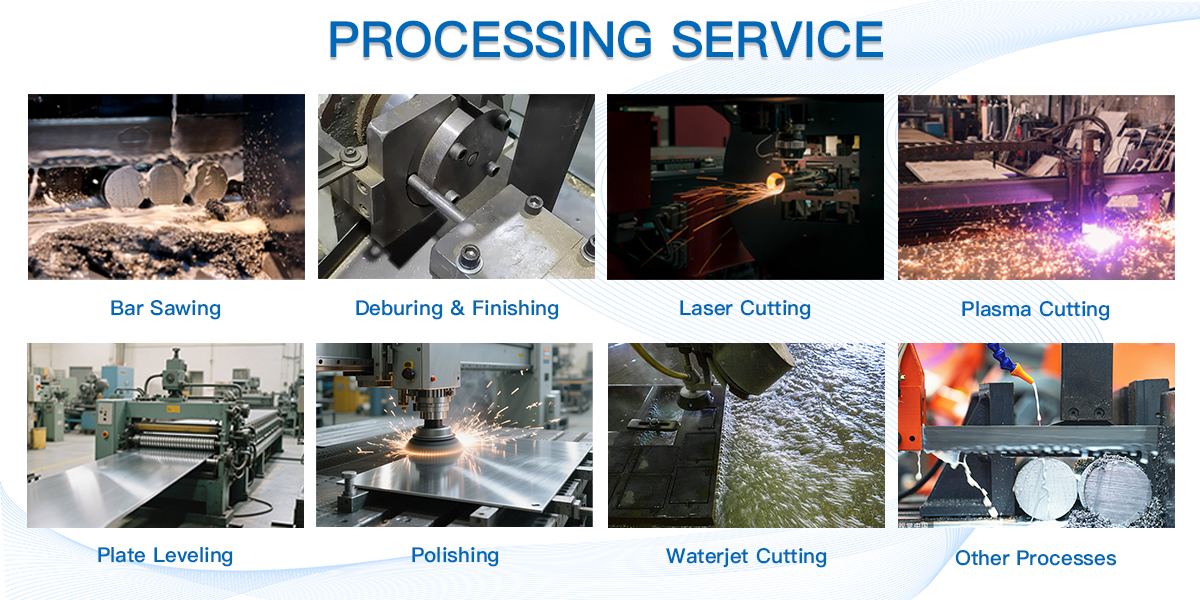
Machining: Readily machined using conventional methods for nickel alloys. Carbide tooling recommended with positive rake angles. Work-hardening rate moderate; rigid setups required for precision tolerances .
Welding: Excellent weldability using GTAW, GMAW, and resistance welding. Matching filler metals maintain properties in weld zone. No preheat required; post-weld solution annealing recommended for optimal corrosion resistance .
Forming & Heat Treatment:
Hot Working: 1177°C (2150°F) minimum, hold for sufficient time to bring entire piece to temperature
Solution Annealing: 1177-1246°C (2150-2275°F), rapid cool or water quench
Cold Working: Good ductility permits forming; anneal after severe deformation to restore properties
Lower temperature annealing produces carbide precipitation, may affect properties
Material Comparison:
vs. 316/304 Stainless: Orders-of-magnitude higher creep strength above 800°C; 230 selected where stainless steels would fail rapidly .
vs. Alloy 625: Superior high-temperature strength and thermal stability above 900°C; 230 preferred for combustion zone components .
vs. Hastelloy X: Higher strength and better oxidation resistance; cobalt-free composition reduces material cost and import dependence .
vs. Alloy 617: Better resistance to carburization and comparable oxidation performance; 617 more susceptible to decarburization in specific environments .
Chemical Processing: Catalyst grid supports in ammonia burners, high-temperature heat exchangers, bellows, ducts
Industrial Heating: Furnace retorts, chains and fixtures, burner flame shrouds, recuperator internals, nitriding furnace components, heat-treating baskets and trays
Power Generation: Supercritical CO2 cycle components, steam superheater hardware, gas turbine hot-section parts
Contact ZYTC Alloy for certified Haynes 230 materials with complete traceability, technical datasheets, and competitive pricing on standard sizes or custom-fabricated components.