Nickel 201 is a commercially pure wrought nickel with controlled low carbon content (0.02% maximum), specifically formulated to prevent graphitization and embrittlement at temperatures above 315°C (600°F). It offers excellent resistance to caustic alkalis, dry gases, and many corrosive environments while maintaining good thermal and electrical conductivity. For service below 315°C, Nickel 200 provides similar properties at lower cost . 1. Product Specifications & Physical DataZYTC Alloy supplies UNS N02201 in comprehensive mill forms for chemical processing, aerospace, and electronic applications requiring verified purity and high-temperature stability. Available Forms: Bar, rod, forging stock, tube, pipe, plate, sheet, strip, wire, and foil (shim) . Specifications: ASTM B160 (rod/bar), B161 (seamless pipe/tube), B162 (plate/sheet/strip), B163 (condenser tubes), B564 (forgings), ASME SB-160/162/163, ISO 9723/9724/9725 .
| Chemical Composition (Weight %) | Nickel 201 Specification |
|---|
| Nickel (Ni) | ≥ 99.0 | | Iron (Fe) | ≤ 0.40 | | Manganese (Mn) | ≤ 0.35 | | Silicon (Si) | ≤ 0.35 | | Copper (Cu) | ≤ 0.25 | | Carbon (C) | ≤ 0.02 | | Sulfur (S) | ≤ 0.010 |
| Physical Properties | Metric | Imperial |
|---|
| Density | 8.89 g/cm³ | 0.321 lb/in³ | | Melting Range | 1435 - 1446°C | 2615 - 2635°F | | Modulus of Elasticity (RT) | 204 GPa | 29.6 × 10⁶ psi | | Electrical Resistivity (RT) | 8.5 µΩ·cm | 8.5 µΩ·cm | | Thermal Conductivity (RT) | 79 W/m·K | 548 BTU·in/hr·ft²·°F |
| Mechanical Properties (Annealed) | Metric | Imperial |
|---|
| Tensile Strength | 403 MPa | 58,500 psi | | Yield Strength (0.2% offset) | 103 MPa | 14,900 psi | | Elongation at Break | 50% | 50% |
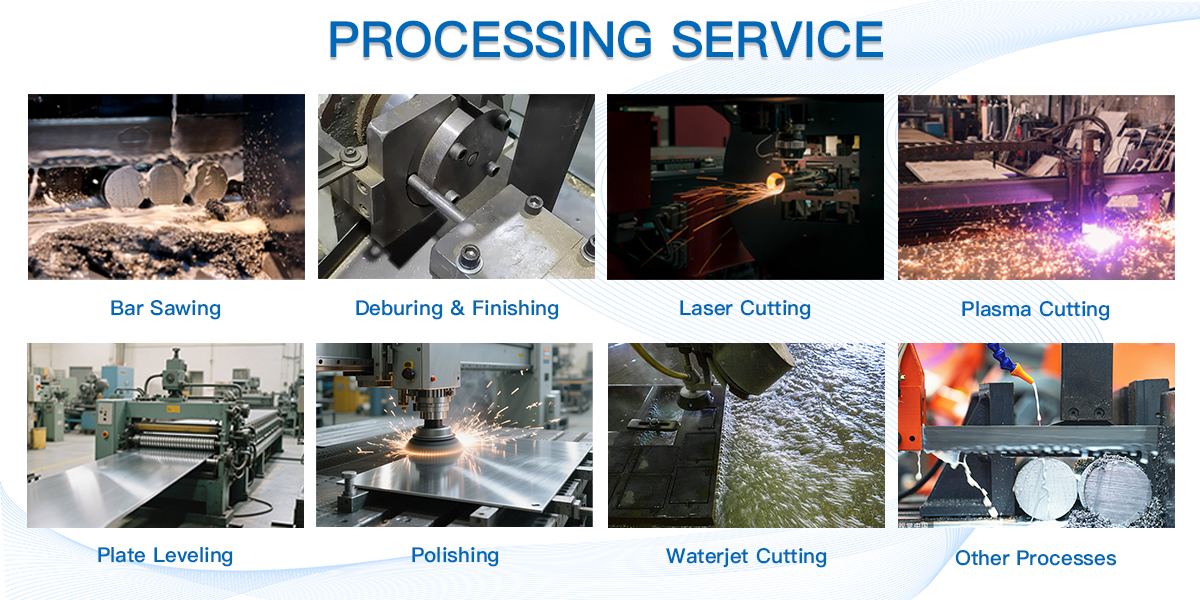
2.Fabrication & Material ComparisonNickel 201 offers excellent fabricability, similar to austenitic stainless steels, but requires more powerful equipment for forming operations due to its higher strength. Hot Working Range: 649-1232°C (1200-2250°F); heavy forming operations recommended above 871°C (1600°F) . Avoid working in the 538-760°C range (embrittlement risk). Cold Working: Excellent response to bending, stamping, drawing, and forming; work-hardening rate higher than carbon steel, requiring intermediate anneals for severe deformation . Annealing: 704-871°C (1300-1600°F), time at temperature depends on section size; rapid cooling not required . Machining: Similar to soft steel but with higher work-hardening rate; requires sharp tools, positive feeds, and heavy-duty lubricants . Welding: Excellent weldability using GTAW, GMAW, SMAW, and resistance welding; matching filler metal (ERNi-1) recommended. Surface must be clean and free of sulfur, lead, and other contaminants .
Applications Chemical Processing: Caustic evaporators, storage tanks, piping systems for sodium hydroxide and potassium hydroxide at elevated temperatures; reactor vessels for organic processes; handling equipment for fatty acids and phenols Aerospace & Defense: Rocket motor cases, missile components, thrust chambers, high-temperature structural parts Food & Pharmaceutical: Equipment requiring product purity at elevated temperatures; processing vessels; cleaning system components Electronics: Electronic tube parts, transducer components, specialized electrical applications Industrial Manufacturing: Combustion boats, plater bars, thermocouple sheaths, high-temperature fixtures
Contact ZYTC Alloy for certified Nickel 201 (UNS N02201 / 2.4068) materials with complete traceability, technical datasheets, and competitive pricing on standard sizes or custom-fabricated components. Email:daisy@zytcsteel.com WhatsApp/WeChat: +86 17335753350 |