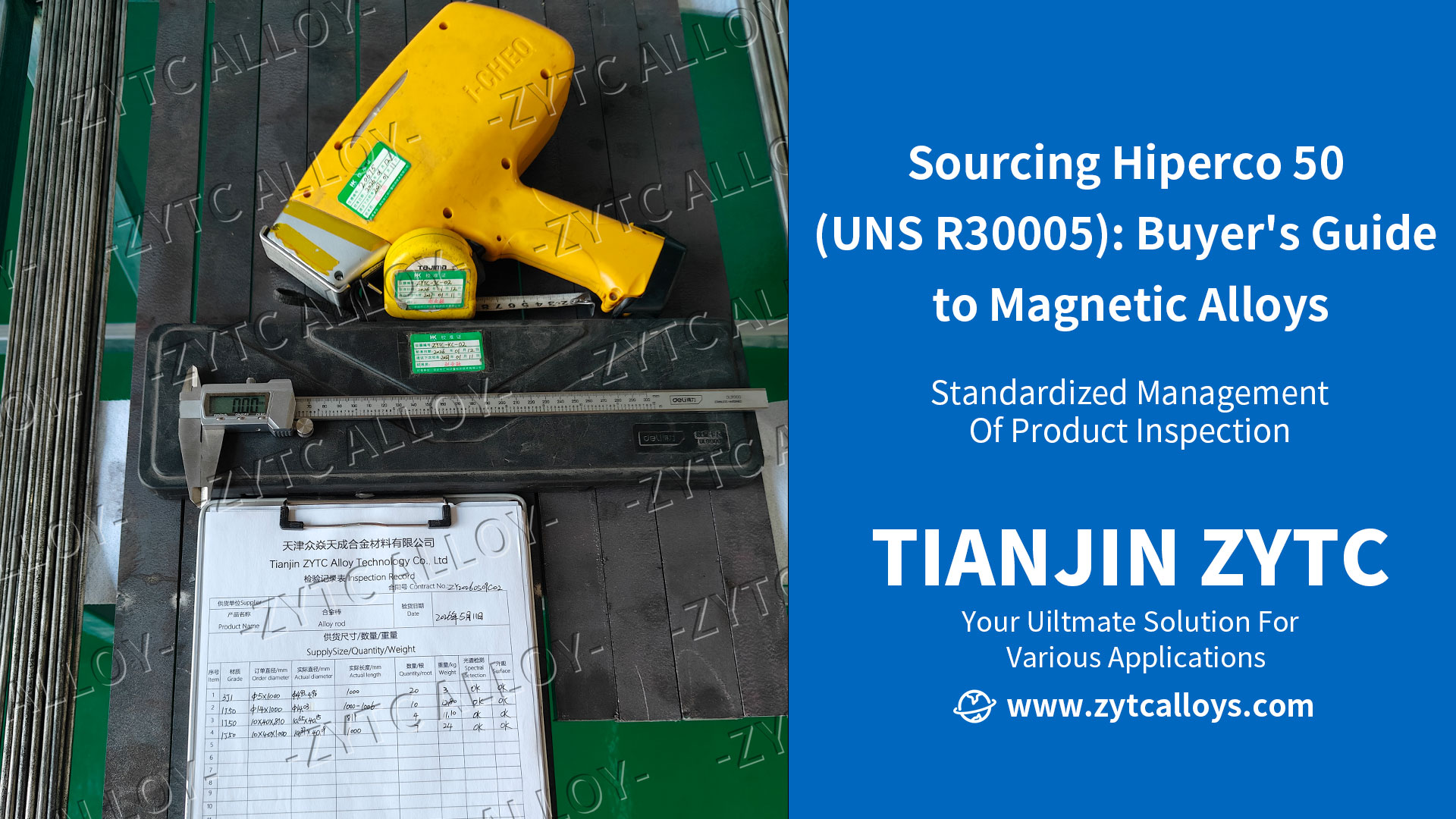
Sourcing Hiperco 50 (UNS R30005): Buyer's Guide to Magnetic Alloys
Why Hiperco® 50 is Not a "Standard" Alloy
In the design of high-performance electric motors, aircraft generators, and active magnetic bearings, space and weight are at a premium. Standard silicon steels reach their physical limits in these high-power-density applications. This is where Hiperco® 50 (UNS R30005), an iron-cobalt-vanadium soft magnetic alloy, becomes indispensable. It offers an exceptional magnetic saturation of up to 24 kilogauss (2.4 T).
However, for procurement managers and design engineers, sourcing Hiperco® 50 is a high-risk endeavor. It is a highly brittle, difficult-to-machine alloy. If the melting, rolling, or heat treatment processes are not strictly controlled, you will receive a material that is either too hard to stamp or fails to meet magnetic targets.
This guide covers the critical procurement criteria you must verify before placing an order.
The Two Critical Specs You Must Demand
Standard Mill Test Certificates (MTCs) only cover chemical composition and basic mechanical properties. For soft magnetic alloys, they are not enough. You must demand specific processing data:
A. Carbon Content (C ≤ 0.010%)
Carbon is the enemy of magnetic permeability. Even a slight deviation in carbon content acts as a "pinning site" for magnetic domain walls, significantly increasing coercive force (Hc) and core loss. When sourcing, ensure the supplier strictly controls carbon levels and uses Vacuum Induction Melting (VIM) to minimize impurities.
B. Thickness Tolerance & Flatness
Hiperco 50 is typically supplied as cold-rolled strip (0.10mm to 0.51mm). Because it is used for stator and rotor laminations, any variation in strip thickness or flatness will cause severe die wear and jamming during high-speed stamping. High-quality suppliers guarantee tight thickness tolerances and low internal stress to prevent camber.
The "Hidden" Processing Trap: Stamping & Hydrogen Annealing
Many buyers assume that once they receive the certified strip, the hard part is over. In reality, Hiperco 50's magnetic performance is often destroyed during downstream processing.
-
The Stamping Challenge: Hiperco 50 is incredibly hard and work-hardens rapidly. Poorly annealed strip will lead to cracked edges during stamping. You must ensure your supplier provides the material in the correct soft (annealed) condition.
-
The Hydrogen Annealing Step: Stamping introduces mechanical stress that completely ruins magnetic properties. Finished laminations must undergo a final anneal in a pure dry hydrogen atmosphere at 760–843°C. This process relieves stress and purifies the metal, allowing grain growth. If the dew point of the hydrogen atmosphere is not perfectly controlled, the final parts will suffer from high core loss.
Why ZYTC Alloy? As a comprehensive supply chain management company, we don't just sell the metal. Our metallurgical engineers provide technical guidance on stamping parameters and heat treatment cycles to ensure your final lamination stack performs as designed.
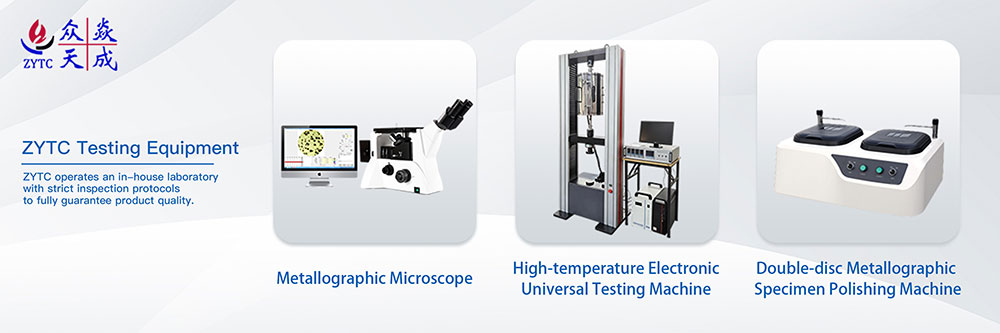
How ZYTC Verifies Every Batch (In-House Lab Capability)
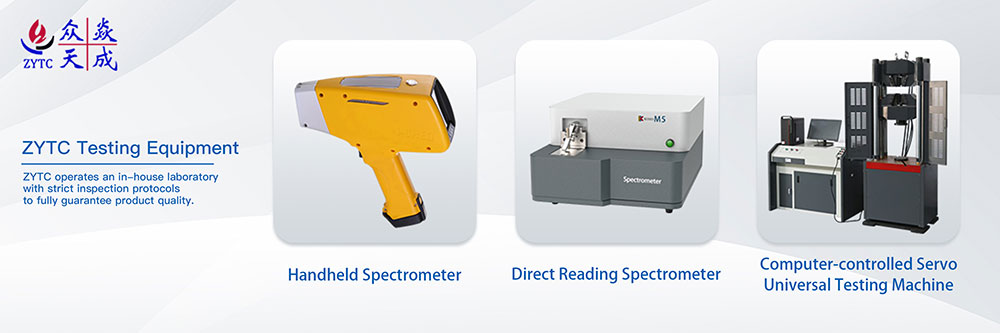
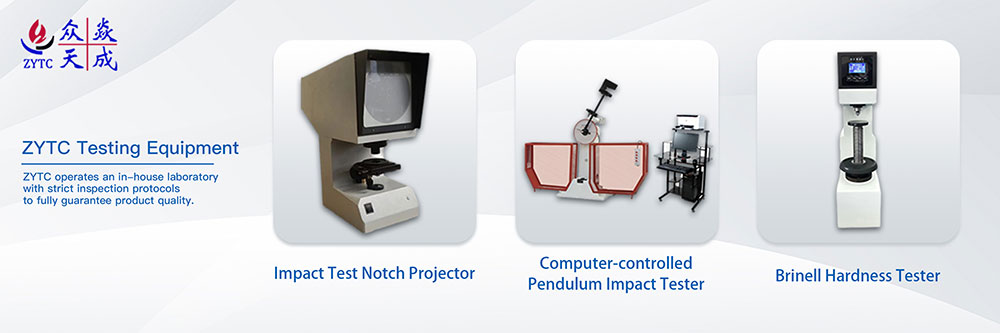
In aerospace and high-end EV applications, a paper certificate is not enough. We verify the physical properties of every heat number in our in-house laboratory:
-
Direct Reading Spectrometer: To verify precise Cobalt (48.75%), Vanadium (1.90%), and strictly control Carbon impurities.
-
Metallurgical Microscope: To inspect grain size and structure. A uniform, recrystallized grain structure is essential for consistent stamping and predictable magnetic performance.
-
Mechanical Testing: To ensure the yield strength and elongation meet the requirements for your specific lamination die.
Whether you need a 50kg sample for R&D prototyping or a multi-ton coil for mass production, we apply the same rigorous lab verification to every batch.
Explore Related Materials for Your Application
Hiperco 50 is often not the only option. Depending on your design requirements, you may need to evaluate alternative materials. Click below to view our full specifications:
-
Looking for higher mechanical strength for high-speed rotors? [Explore Hiperco 50 HS (High Strength)]
-
Need a lower-cost alternative for standard motor applications? [View our selection of Silicon Steels & Soft Magnetic Alloys]
-
Looking for related Cobalt-based superalloys for aerospace? [Read our L605 Cobalt Alloy Sourcing Guide]
Sourcing Hiperco® 50 doesn't have to be a gamble. By verifying carbon limits, demanding flatness guarantees, and partnering with a supplier that understands the critical hydrogen annealing process, you can ensure your magnetic components meet the highest performance standards.
Request a sample or technical datasheet today.
📧 Email: daisy@zytcsteel.com
📱 WhatsApp/WeChat: +86 17335753350
-
Q: Why does Hiperco 50 lose its magnetic properties during stamping?
-
A: Stamping introduces severe mechanical stress and dislocations into the alloy's crystal lattice. This "pins" the magnetic domain walls, drastically increasing coercive force and core loss. A final hydrogen annealing process is mandatory to relieve this stress and recrystallize the grain structure.
-
-
Q: What is the difference between Hiperco 50 and Hiperco 50 HS?
-
A: Hiperco 50 HS contains a higher niobium (Nb) content (approx. 0.30% vs 0.05%). This provides significant grain refinement, increasing the yield strength (up to 185 ksi) and making it ideal for high-speed rotor laminations, though it slightly reduces maximum magnetic permeability.
-
The Hidden Cost of Heat Treating MP35N In-House vs. Buying Pre-Aged Bars
How to Avoid "Paper Mill" Traps When Sourcing Medical Titanium (Ti-6Al-4V)
Related Article