China Cobalt Alloy Supply Chain Report 2026: How to Choose the Right Supplier

Why Sourcing a Supplier is Harder Than Sourcing the Material
The global cobalt alloy market is projected to maintain a 4.6% CAGR through 2032. Driven by aerospace, medical implants, and power generation, Chinese suppliers are increasingly viable for global OEMs. However, the real headache for procurement teams is often not the material itself, but the logic of supplier selection. For the same grade (e.g., CoCrMo, L605, MP35N), the certainty you get from different supplier types varies completely.
The Four Supplier Models in China's Cobalt Alloy Supply Chain
Model 1: Large Smelting Groups
-
Traits: Owns smelting capacity; focuses on ingots and base billets.
-
Boundaries: Usually not involved in downstream precision machining. Limited responsiveness to small batches and customized requirements.
Model 2: Specialized Casting Foundries
-
Traits: Focuses on investment castings and hardfacing.
-
Boundaries: Product forms are fixed; custom machining and multi-form requirements (like plates or tubes) are not their core focus.
Model 3: Precision Processing Mills
-
Traits: Focuses on specific forms like ultra-thin strips or capillaries.
-
Boundaries: Narrow product line; raw materials rely on external sourcing; usually cannot handle multi-grade, one-stop needs.
Model 4: Supply Chain Management Companies (e.g., ZYTC Alloy)
-
Traits: Integrates melting, forging, rolling, heat treatment, testing, and logistics under a unified quality system.
-
Key Advantages:
-
One-stop Delivery: From material selection to semi-finished parts, managed by the same supplier, reducing traceability breaks.
-
In-House Lab Verification (Crucial): Unlike pure traders who rely on paper certificates, we operate a fully equipped in-house laboratory (including Direct Reading Spectrometers, Universal Testing Machines, and Metallurgical Microscopes). We physically verify the microstructure and mechanical properties of every batch before shipping.
-
Scalable Flexibility: Whether you need a small-batch prototype for R&D or a large-volume order for mass production, our flexible supply chain network accommodates both, eliminating the "minimum order quantity" barriers often imposed by large mills.
-
-
Boundaries: Does not own melting furnaces; extreme ultra-low-cost requirements might not match source factories.
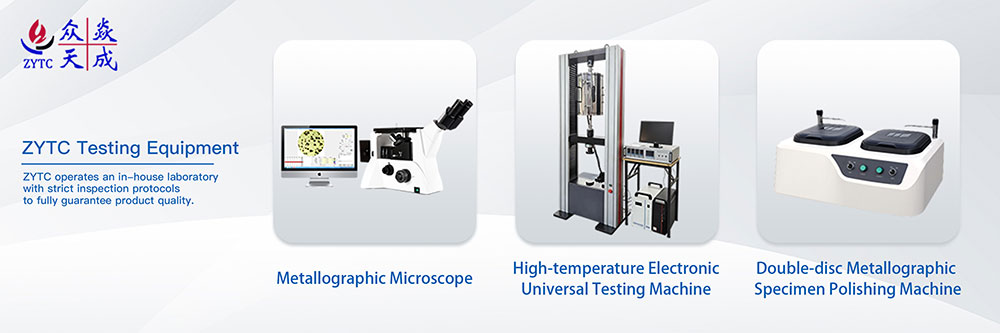
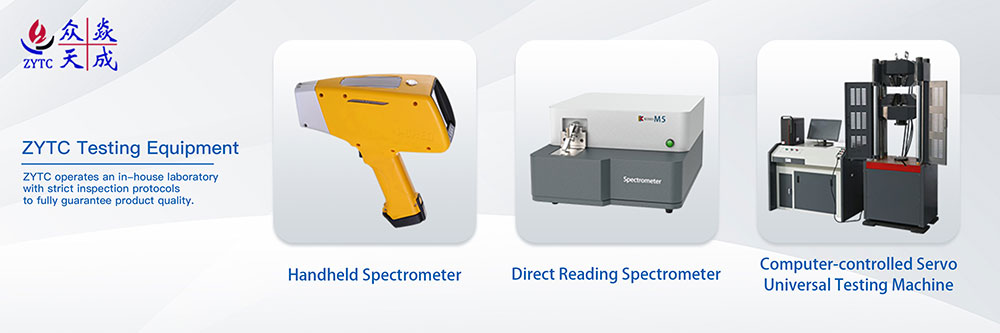
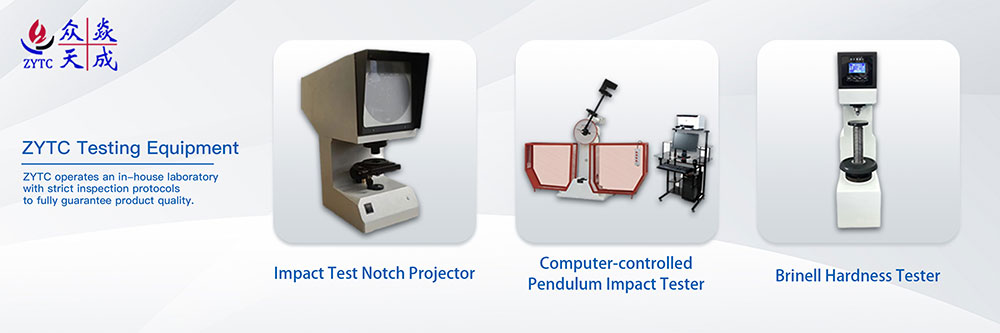
ZYTC's in-house laboratory verifying the chemical composition and microstructure of cobalt alloys to ensure batch consistency.
Supplier Evaluation Framework: Five Things More Important Than Price
Regardless of the supplier type, include these five items in your technical review:
| Review Item | Key Confirmation | Why It Matters |
|---|---|---|
| Melting Route | Is VIM, VAR, or triple melting explicitly stated? | Impacts fatigue life and corrosion resistance. |
| In-House Lab | Does the supplier have a physical lab (Spectrometer, Metallography) to verify the material, or do they only pass along a mill certificate? | A lab is the only way to ensure batch-level quality and prevent counterfeit/substandard materials. |
| Traceability Chain | Do melt number, process batch, and test report match? | Determines if root causes can be identified during failures. |
| Delivery State | Are annealed, cold-drawn, and aged states clearly distinguished with batch-specific data? | Determines downstream machinability. |
| Order Flexibility | Can the supplier handle both R&D prototype samples and mass production consistently? | Crucial for reducing time-to-market for new devices. |
 |
 |
A Common Procurement Pitfall: Measuring "Supply Chain" with "Factory Price"
Many buyers compare a supply chain company's quote with a factory's ex-works price, concluding the latter is cheaper. This ignores the hidden risk costs.
If you manage these steps independently, hidden costs manifest as:
-
Machining scrap caused by batch inconsistency (which a lab-equipped supplier would catch early).
-
Time wasted on quality disputes between multiple vendors.
-
Audit failures due to broken traceability documents.
For medical and aerospace applications, the cost of a single material failure far exceeds the unit price difference. Choosing a supply chain management company with an in-house lab is paying for "certainty."
Conclusion: Define Your Needs First, Then Choose the Type
-
For large volumes of base billets → Large smelting groups.
-
For casting or hardfacing → Specialized foundries.
-
For specific forms with extreme precision → Precision mills.
-
For multi-form combinations, small-to-large order flexibility, and verifiable in-house lab testing → Supply chain management companies.
ZYTC Alloy, founded in 1989, integrates global supply chain resources. Our value lies in centralizing quality control—backed by our professional testing equipment and laboratory—into a single technical interface. Whether you need a 50kg sample run or a multi-ton production order, we guarantee the same rigorous inspection standards.
If you are evaluating Chinese cobalt alloy suppliers, feel free to contact us for a type-matching consultation.
📧 Email: daisy@zytcsteel.com
📱 WhatsApp/WeChat: +86 17335753350
How to Avoid "Paper Mill" Traps When Sourcing Medical Titanium (Ti-6Al-4V)
Sourcing L605 Cobalt Alloy: Metallurgy, Standards & Supplier Audits
Related Article