Elgiloy & Ni-Span-C 902 Supplier | High-Elasticity Alloy Guide
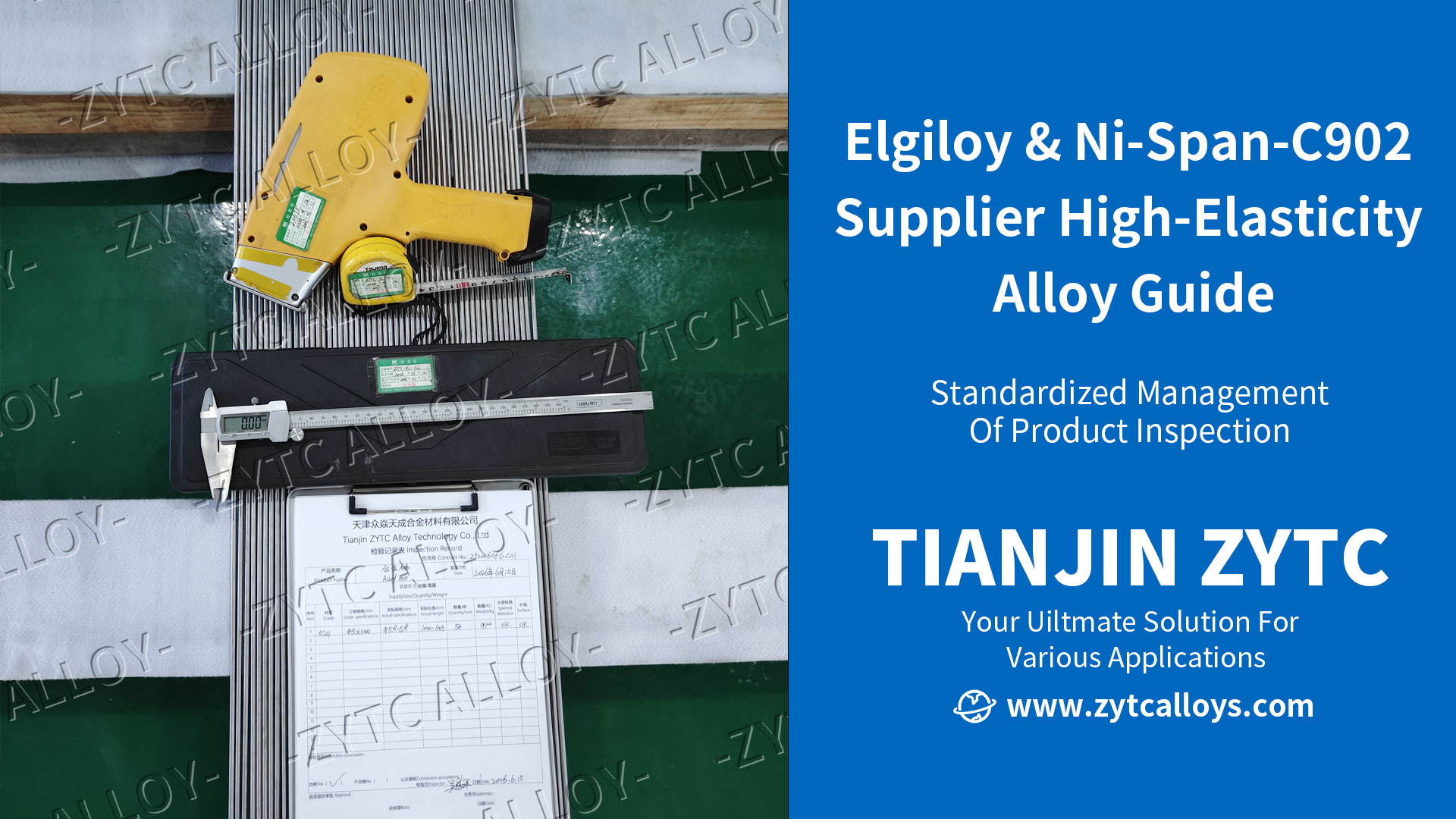
ZYTC Alloy specializes in supplying Elgiloy® (UNS R30003) and Ni-Span-C 902 in wire, strip, and bar forms for critical medical devices, precision instruments, and aerospace components. While both are high-elasticity alloys, they solve entirely different engineering challenges: Elgiloy delivers maximum tensile strength and unmatched corrosion resistance in micro-dimensions, whereas Ni-Span-C 902 provides a tunable thermoelastic coefficient (TEC) to maintain constant modulus across temperature fluctuations.
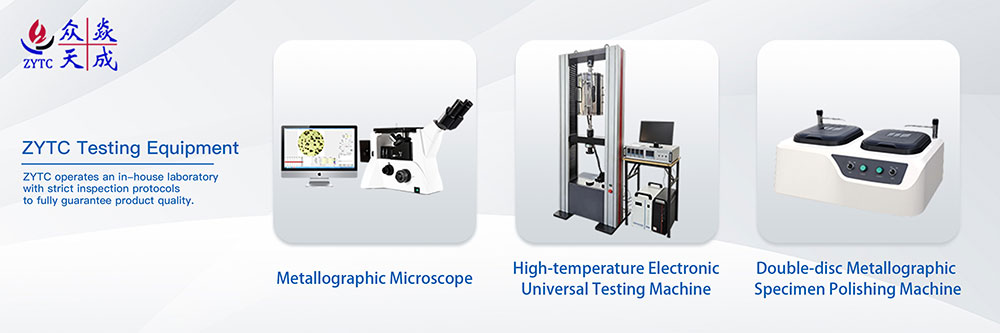
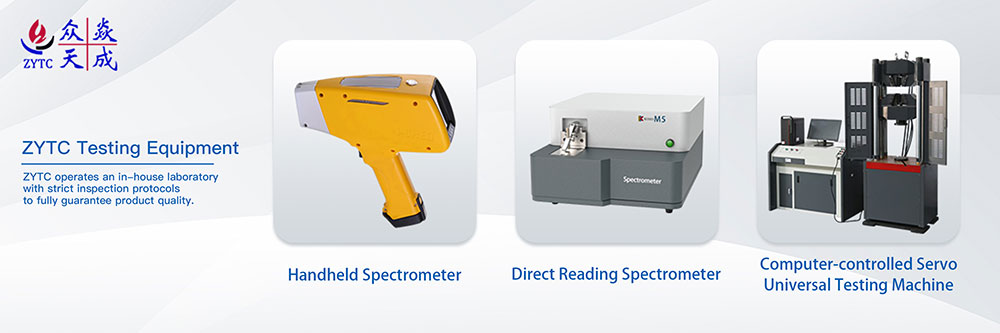
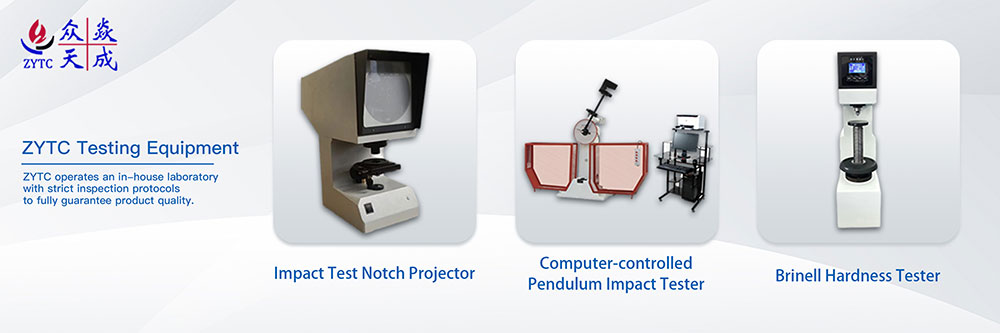
Our in-house laboratory verifies the chemical composition and mechanical properties of every batch before shipment to ensure your spring designs perform flawlessly.
The Engineering Problem: Strength vs. Thermal Stability
Specifying a "high-elasticity alloy" without defining the operating environment is a common source of field failures.
-
If your application requires navigating tortuous anatomy or operating in highly corrosive environments with minimal cross-section, Elgiloy is the benchmark.
-
If your application is a precision instrument (like a Bourdon tube or aneroid capsule) where a slight change in temperature would alter the spring rate and cause measurement errors, Ni-Span-C 902 is the standard solution.
Here is how to choose between them.
Elgiloy (UNS R30003): Maximum Strength & Corrosion Resistance
Elgiloy is a non-magnetic, cobalt-chromium-nickel-molybdenum alloy. When cold-worked and aged, it achieves an exceptional combination of strength and corrosion resistance that stainless steels cannot match.
Key Mechanical & Physical Data:
-
Ultra-High Strength: Tensile strength up to 2600 MPa (approx. 377 ksi) in the spring-temper + aged condition.
-
Excellent Corrosion Resistance: Highly resistant to sulfide stress corrosion cracking, making it ideal for medical implants and oil & gas components.
-
Non-Magnetic: Crucial for devices used under MRI guidance.
-
Operating Range: Excellent performance from cryogenic temperatures up to 850°F (454°C).
Critical Applications:
-
Medical: Cardiovascular guidewires, orthodontic archwires, catheter braiding, and surgical instruments (Compliant with ASTM F1058 / ISO 5832-7).
-
Industrial: Precision springs, seals, and components in aggressive chemical environments.
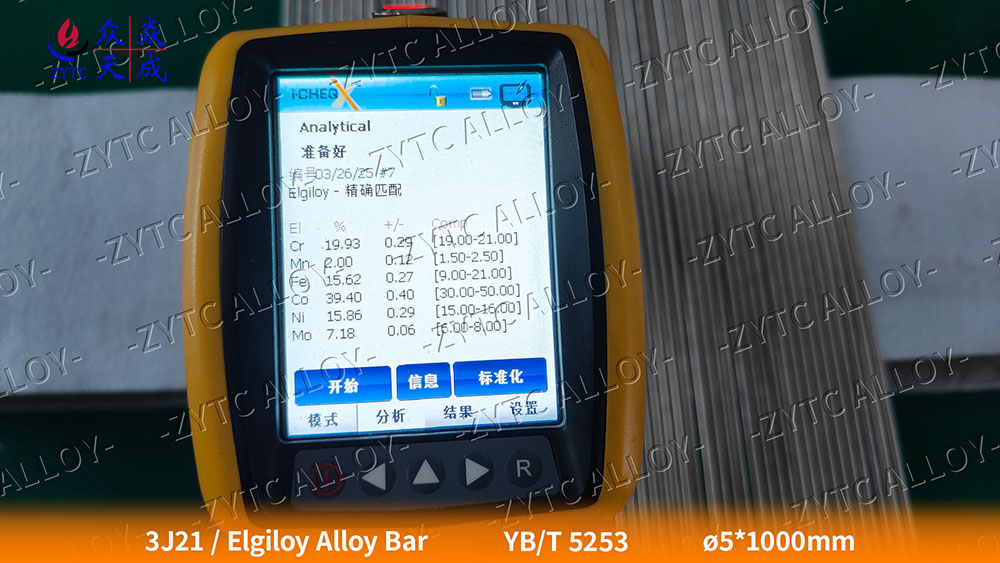
How ZYTC Verifies Elgiloy: We use Direct Reading Spectrometry to confirm the precise Co-Cr-Ni-Mo balance and monitor beryllium content, which directly affects the age-hardening response. For wire and strip, we verify tensile strength using Universal Testing Machines to confirm the temper condition meets your spring design.
Ni-Span-C 902: Tunable Thermal Stability for Precision Instruments
Ni-Span-C 902 (UNS N09902) is a precipitation-hardenable nickel-iron-chromium alloy (approximately 42% Ni, 5.5% Cr, 2.5% Ti). Its standout feature is the ability to control and tune its Thermoelastic Coefficient (TEC).
Key Mechanical & Physical Data:
-
Constant Modulus: Can be processed to maintain a constant modulus of elasticity over the range of -45°C to +65°C (-50°F to +150°F).
-
Adjustable TEC: Through precise cold work and heat treatment, we can supply material with a zero TEC (constant modulus) or a slightly positive/negative TEC to compensate for other components in your assembly.
-
Precipitation Hardening: Typically formed in the 50% cold-worked condition, then aged at 900°F (482°C) for 8 hours or 1250°F (677°C) for 3 hours to achieve high hardness (40–44 HRC).
-
Magnetic Properties: Ferromagnetic below approximately 400°F (204°C).
Critical Applications:
-
Precision springs and hairsprings.
-
Bourdon tubes, aneroid capsules, and diaphragms.
-
Weighing instruments, geophysical equipment, and aerospace sensors.
How ZYTC Verifies Ni-Span-C 902: Because TEC is highly sensitive to chemistry and processing, we strictly verify the Titanium (Ti) and Aluminum (Al) content via spectrometry before manufacturing. For finished strip or wire, we provide hardness and tensile testing data to confirm the aged condition meets your exact design intent.
Material Selection Matrix
| Requirement | Elgiloy (UNS R30003) | Ni-Span-C 902 |
|---|---|---|
| Maximum Tensile Strength | Best (up to 2600 MPa) | Good (in aged condition) |
| Corrosion Resistance | Excellent (seawater, body fluids) | Moderate |
| Constant Modulus over Temp | No | Yes, tunable (-45°C to +65°C) |
| Non-Magnetic | Yes | Ferromagnetic below ~400°F |
| Medical / Implant Use | Yes (ASTM F1058) | No |
| Typical Forms | Wire, Strip, Bar | Strip, Wire, Bar |
Quality Assurance: What ZYTC Verifies Before Shipment
For high-elasticity alloys, "meets spec" is not sufficient. The temper condition, impurity levels, and aging response determine whether the material will perform in your finished component.
Our in-house laboratory provides:
-
Chemical Composition Verification: Direct-reading spectrometer for all alloy families.
-
Mechanical Testing: Tensile and yield strength testing on universal testing machines.
-
Hardness Testing: To confirm spring temper or aged condition.
-
Full Traceability: From melt heat number to finished product.
Start Your Custom Order
To help us recommend the correct alloy and temper condition, please provide:
-
Alloy type (Elgiloy or Ni-Span-C 902).
-
Form required (wire diameter, strip thickness × width, or bar diameter).
-
Tensile strength or hardness target.
-
Quantity (kg or meters).
-
Any certification requirements.
📧 Email: daisy@zytcsteel.com
📱 WhatsApp/WeChat: +86 17335753350
2026 Nickel & Cobalt Alloy Sheet, Strip & Plate Selection Guide
The Hidden Cost of Heat Treating MP35N In-House vs. Buying Pre-Aged Bars
Related Article