Alloy 720 & 720Li Turbine Disc Superalloy Forgings
Alloy 720 (also written U-720; European designation NiCr18Co15TiMoAl) is a high-volume-fraction gamma-prime strengthened nickel superalloy developed for gas turbine discs, blades and shafts. With roughly 45% gamma-prime by volume — about twice the fraction of Alloy U-500 or Waspaloy®-class alloys — it delivers tensile and creep strength that Alloy 718 cannot reach in the 650–815 °C (1200–1500 °F) band where turbine discs run. UDIMET® and Waspaloy® are registered trademarks of Special Metals Corporation; the alloy is identified here as Alloy 720 for grade identification only.
Alloy 720 exists in two closely related versions, and telling them apart is the single most important step in any inquiry. The original U-720 (higher chromium, carbon and boron) serves blades, vanes and static hot-section hardware. The low-interstitial modification Alloy 720Li (also GH4720Li in China) was developed for rotating discs: chromium, carbon and boron are reduced to suppress sigma-phase formation during thousands of hours at temperature and to improve forgeability. The two are not interchangeable on a certificate, and a drawing that says “720Li” must not be quoted as plain 720.
1. Alloy 720 vs Alloy 720Li — Which One Does Your Drawing Mean?
| Attribute | Alloy 720 (original U-720) | Alloy 720Li / GH4720Li |
|---|---|---|
| Chromium | about 18% | 15.5–16.5% |
| Carbon / Boron | about 0.035% C / 0.033% B | 0.010–0.020% C / 0.010–0.020% B |
| Sigma-phase risk | Known to be sigma-prone after long exposure | Strongly suppressed by lower chromium |
| Forgeability | Good | Better — fewer carbide and boride stringers |
| Typical parts | Turbine blades, vanes, static hot-section hardware | Turbine discs, spacers, shafts, seal rings |
| Service window | up to ~815 °C (1500 °F) | 650–760 °C long-term disc service |
Both versions share the same backbone: nickel balance, cobalt 14–15.5%, molybdenum 2.75–3.25%, tungsten 1.0–1.5%, titanium 4.75–5.25% and aluminium 2.25–2.75%. State which version your drawing calls for when requesting a quote.
2. Chemical Composition of Alloy 720Li (weight %)
| Element | Limit (720Li) | Function in the alloy |
|---|---|---|
| Nickel, Ni | Balance | Gamma-prime matrix base |
| Chromium, Cr | 15.50–16.50 | Oxidation and hot-corrosion resistance (held low for phase stability) |
| Cobalt, Co | 14.00–15.50 | Lowers stacking-fault energy, stabilises gamma-prime |
| Titanium, Ti | 4.75–5.25 | Primary gamma-prime former |
| Molybdenum, Mo | 2.75–3.25 | Solid-solution strengthening |
| Aluminium, Al | 2.25–2.75 | Gamma-prime former, oxidation resistance |
| Tungsten, W | 1.00–1.50 | Solid-solution strengthening |
| Zirconium, Zr | 0.025–0.050 | Grain-boundary strengthening |
| Carbon, C | 0.010–0.020 | Carbide control (held low in the Li grade) |
| Boron, B | 0.010–0.020 | Grain-boundary strengthening, creep ductility |
The very high Ti + Al content (about 7%) produces the roughly 45% gamma-prime volume fraction that carries the strength. The same fraction is what makes the alloy demanding to process: the hot-working window is narrow and the material work-hardens quickly, so forging must be held sub-solvus on heated dies. For the original U-720, the chromium, carbon and boron limits are adjusted upward as described in the comparison table above.
3. Why the “Li” Exists: The Sigma-Phase Story
Sigma phase is a brittle intermetallic that precipitates during long exposure at 700–800 °C and consumes the gamma-prime that gives the alloy its strength. Published research on both alloys (quantitative X-ray diffraction of electrolytically extracted precipitates, Metallurgical and Materials Transactions A, 1999) gives the clearest numbers available:
- Alloy 720Li held at 800 °C for 3000 hours: sigma stayed at about 0.1 wt%.
- Original Alloy 720 under the same conditions: sigma rose to about 5 wt% and saturated by ~1000 hours.
That fifty-fold difference is why rotating parts — discs and shafts that accumulate tens of thousands of hours — are specified in 720Li, while the original 720 is accepted for blades, vanes and static hardware where exposure budgets are shorter. If a buyer asks for “Udimet 720” for a disc application, a competent supplier should confirm whether 720Li is actually meant.
4. Heat Treatment: Two Routes, Two Different Disc Behaviours
Alloy 720Li reaches design strength only after a full solution-plus-dual-age sequence, and the solution temperature is chosen deliberately against the gamma-prime solvus (about 1150 °C):
| Route | Practice | Resulting structure & use |
|---|---|---|
| Sub-solvus (approx. 1080–1110 °C, 4 h) | Oil quench, then dual age: 650 °C/24 h + 760 °C/16 h, air cool | Fine grain, primary gamma-prime pinned at boundaries → high tensile and low-cycle-fatigue strength — the disc route |
| Super-solvus (above the ~1150 °C solvus) | Solution above solvus, quench, same dual-age philosophy | Coarser grain, uniform gamma-prime → better creep and crack-growth resistance |
The exact cycle — quench medium, ageing times and — most critically — the heating rate through the ageing window (to avoid strain-age cracking) must follow the applicable OEM process specification and component drawing. Published representative cycles (including 1080–1110 °C/4 h oil quench + 650 °C/24 h + 760 °C/16 h) vary by OEM and by part; ZYTC Alloy heat-treats to the customer’s stated specification and reports the actual cycle on the test report.
5. Mechanical Properties
| Property (RT, solution treated + aged) | Common acceptance minima | Typical, fully aged |
|---|---|---|
| Tensile strength | ≥ 1103 MPa (160 ksi) | 1380–1500 MPa |
| Yield strength, 0.2% offset | ≥ 862 MPa (125 ksi) | 1050–1200 MPa |
| Elongation | per order specification | 8–15% |
| Hardness | by agreement | 38–45 HRC |
| Grain size | to drawing | ASTM 6–10 (sub-solvus route) |
Values vary with section size, grain size and the heat-treatment route chosen; acceptance limits are those of the purchase order and the applicable OEM process specification, not these indicative figures. Request the certified test report for the actual lot.
6. Physical Properties
| Property | Value |
|---|---|
| Density | 8.08 g/cm³ (0.292 lb/in³) |
| Melting point (published datasheets) | approx. 1371 °C (2500 °F) |
| Gamma-prime solvus | about 1150 °C |
| Thermal expansion, 20–100 °C | about 12.2 µm/m °C |
| Gamma-prime volume fraction | about 45% |
7. Applications
| Part | Grade | Why Alloy 720 wins |
|---|---|---|
| Turbine discs, compressor discs, spacers | 720Li (GH4720Li) | Sigma resistance + sub-solvus LCF strength for 650–760 °C service |
| Turbine blades, vanes | 720 | Higher Cr for hot corrosion; shorter exposure budgets |
| Shafts, seal rings, bolts | 720Li | Retains dimensions and creep strength through long holds |
| Industrial gas turbine hardware | both | Originated in land-based turbines; strong at 500–800 °C band |
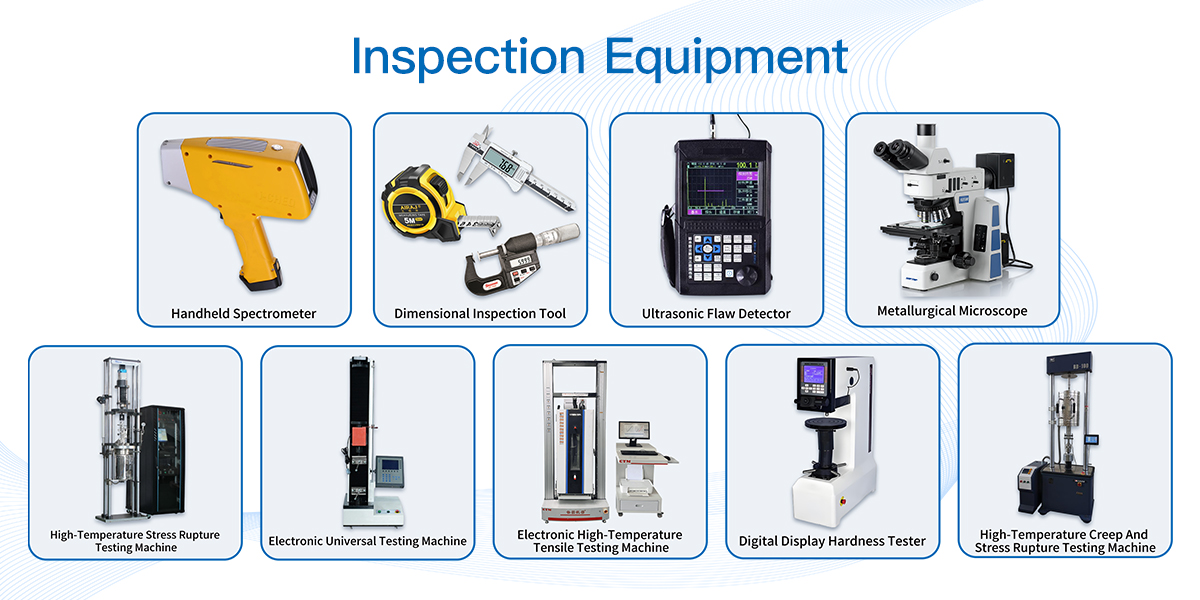
ZYTC Alloy supplies Alloy 720 / 720Li as open-die forgings, seamless rolled rings, discs and round bars, ultrasonically tested per ASTM A388 / EN 10228-3 and certified to EN 10204 3.1/3.2. Forged product gives continuous grain flow aligned with the principal stress direction — the reason rotating discs are forged rather than machined from billet.
8. Fabrication Notes
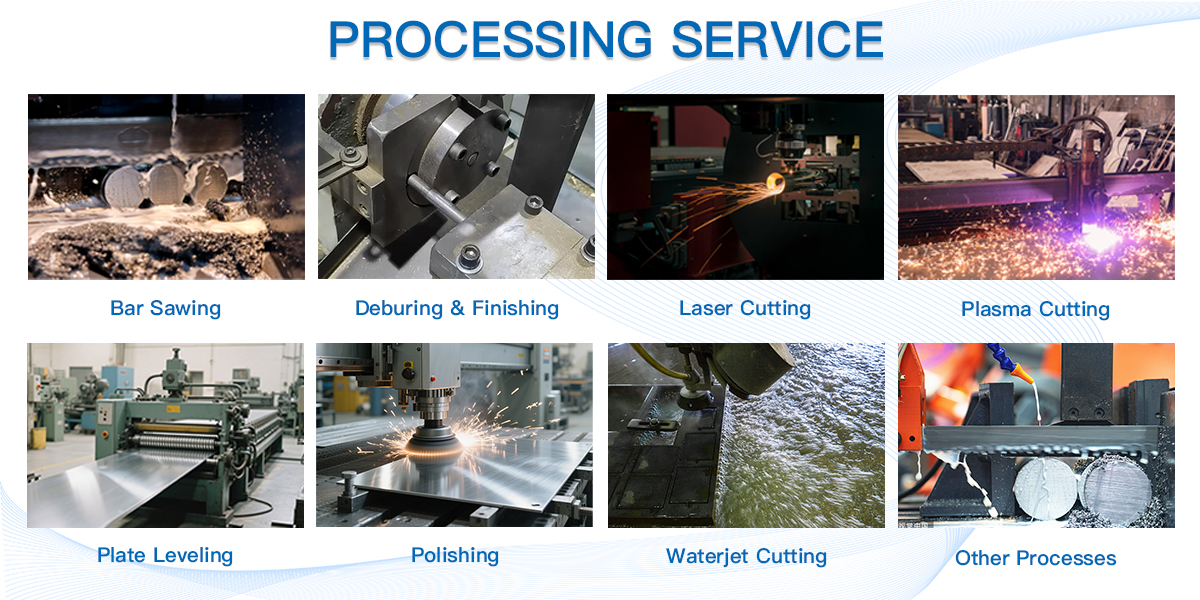
- Forging: narrow hot-working window; hold sub-solvus on heated dies to avoid cracking. Plan generous reductions early and finish below the solvus for fine grain.
- Machining: machinable in the solution-treated condition with rigid setups, positive-rake carbide tooling and heavy coolant; the aged condition is severely work-hardening and abrasive.
- Welding:fusion weldability is limited — the high gamma-prime fraction brings a real strain-age-cracking risk. Weld only in the fully solution-treated condition with rapid post-weld heating to ageing temperature; brazing is the preferred joining method for complex hardware.
- Cleaning: remove all sulphur-bearing marking and lubricant residues before heat treatment to avoid grain-boundary attack.
9. Designations & Procurement — Read Before You Quote
| Designation | Where it is used |
|---|---|
| NiCr18Co15TiMoAl | European descriptive designation, appears on EU mill certificates |
| NC18K15TDA | AFNOR (French) designation |
| GH4720Li | Chinese wrought-superalloy designation for the Li variant |
| Alloy 720 / U-720 / U-720Li | Trade-origin names; UDIMET® is a Special Metals trademark |
| ASTM B637 | Commercial standard for precipitation-hardening nickel alloy bars, forgings and forging stock |
Alloy 720 has no universally published UNS number and no general-purpose AMS bar/plate specification. Procurement runs through ASTM B637-style acceptance, OEM process specifications or the customer drawing. Be cautious with datasheets that attach AMS 5764, AMS 5599 or other generic AMS numbers to this alloy — those numbers cover a stainless steel and Alloy 625 sheet respectively, not Alloy 720. Quote from the drawing, confirm the grade (720 vs 720Li) and the required condition, and let the certified test report close the loop.
Why Choose ZYTC Alloy
- Open-die forged rings, discs, shafts and bars in both 720 and 720Li chemistries, melted EAF+VOD+ESR (triple-melt routes available on request)
- Sub-solvus or super-solvus heat treatment to your stated specification, with the actual cycle reported on the certificate
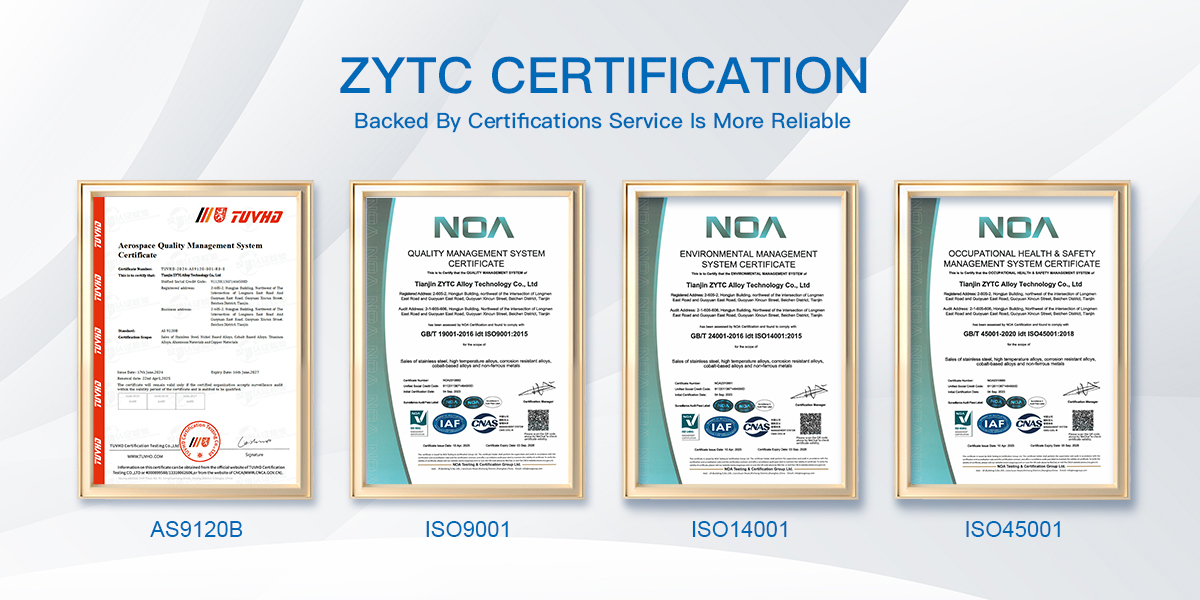
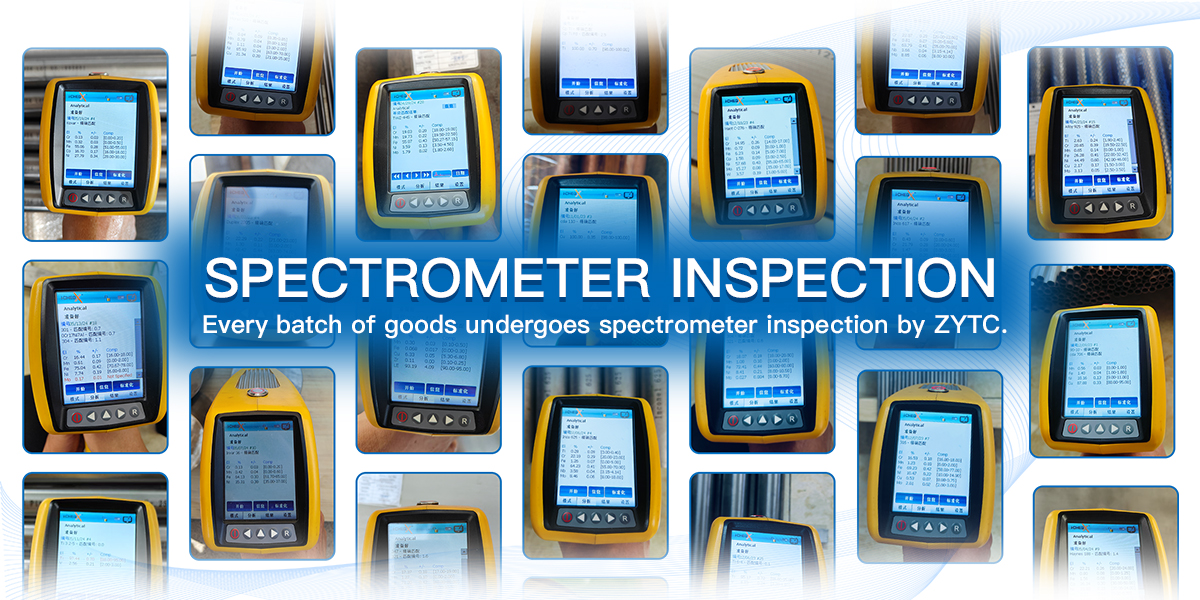
- UT per ASTM A388 / EN 10228-3; EN 10204 3.1/3.2 certification with ladle analysis on every heat
- Grade confirmation built into quotation — we flag 720 vs 720Li mismatches before production, not after machining
Send us your drawing and the intended service temperature, and we will confirm the grade, propose the forging and heat-treatment route and quote within one working day.