Alloy 52 is a controlled expansion nickel-iron alloy containing approximately 51% nickel, specifically engineered for glass-to-metal sealing applications in the telecommunications and electronics industries. Its nearly constant coefficient of thermal expansion up to 565°C (1050°F) makes it highly suitable for sealing with soft glasses and ceramics, preventing differential expansion in the joint area . This alloy is widely used for electronic tubes, automotive lamps, industrial lighting, and hermetic devices .
1. Product Specifications & Physical DataAlloy 52 is available in various mill forms for precision electronic component manufacturing requiring controlled expansion properties and verified sealing performance. Available Forms: Bar, rod, wire, strip, sheet, plate, and coil Specifications: ASTM F30, MIL I-23011 Class 2, UNS N14052, Werkstoff Nr. 2.4478
| Chemical Composition (Weight %) | Alloy 52 Specification |
|---|
| Nickel (Ni) | 50.5 - 52.0 | | Iron (Fe) | Balance | | Silicon (Si) | 0.30 max. | | Manganese (Mn) | 0.60 max. | | Carbon (C) | 0.05 max. |
| Physical Properties | Metric | Imperial |
|---|
| Density | 8.30 g/cm³ | 0.300 lb/in³ | | Melting Point | 1427 - 1450°C | 2600 - 2640°F | | Curie Temperature | 530°C | 986°F | | Thermal Conductivity | 14 - 17 W/m·K | 97 - 118 BTU·in/hr·ft²·°F | | Electrical Resistivity | 44 µΩ·cm | 44 µΩ·cm |
| Mechanical Properties (Annealed) | Metric | Imperial |
|---|
| Tensile Strength | 450 - 550 MPa | 65 - 80 ksi | | Yield Strength (0.2% offset) | 280 MPa | 40 ksi | | Elongation | 35% | 35% | | Hardness (Brinell) | 80 HB | 80 HB |
2. Operating Conditions & Selection CriteriaService Temperature Range: Optimized for sealing and service up to 450-565°C (840-1050°F); maintains nearly constant CTE up to 565°C . Expansion Matching: CTE of 9.8-10.6 µm/m·°C across the 30-400°C range enables reliable sealing with soft glass compositions, preventing seal failure due to thermal stress . Curie Point: Magnetic transformation at approximately 530°C (986°F) affects expansion behavior; alloy performance is predictable both below and above the Curie temperature . Cryogenic Toughness: High strength and toughness maintained at cryogenic temperatures . Magnetic Properties: Exhibits good magnetic properties due to higher nickel content (51%) compared to other nickel-iron family members . Sealing Type: Typically used as pin material in compression seals and lead frames in microelectronic packages .
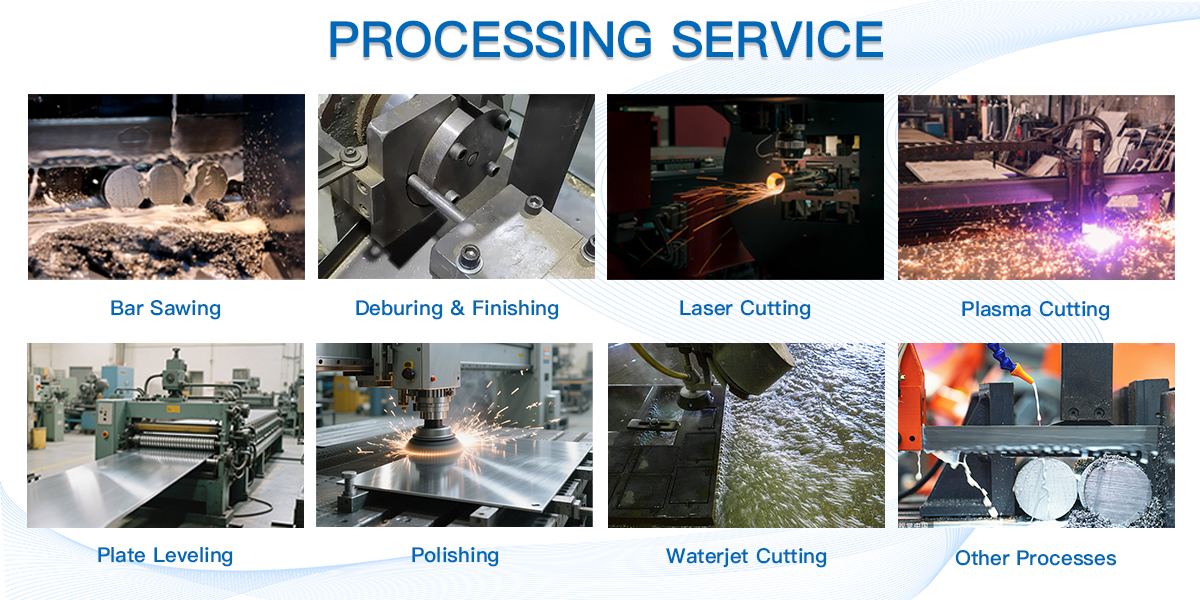
3. Fabrication & Material ComparisonAlloy 52 offers good fabricability with appropriate techniques, though its controlled expansion characteristics require careful thermal processing. Annealing: 815-1000°C (1500-1830°F), air cool or rapid cooling; typically used in annealed condition for sealing applications because residual cold work distorts the CTE . Stress Relieving: 538°C (1000°F) for intermediate strain relief . Cold Working: Can be cold worked using conventional methods; alloy remains ductile . Machining: Similar to austenitic 300 series stainless steels; cutting oils containing sulfur should be avoided as they can contaminate the alloy . Welding: Weldable using all conventional methods including GTAW, plasma arc, and GMAW .
| Material Comparison | Alloy 52 | Kovar (ASTM F-15) | Alloy 48 | Alloy 42 |
|---|
| Nominal Nickel % | 51% | 29% | 48% | 41% | | Cobalt Content | — | 17% | — | — | | CTE (30-400°C) µm/m·°C | 10.4 | 5.3 | 9.0 | 7.0 | | Density (g/cm³) | 8.30 | 8.36 | 8.25 | 8.12 | | Curie Temp (°C) | 530 | 435 | 471 | 380 | | Typical Sealing Application | Compression seals with soft glass | Matched seals with borosilicate glass | Matched seals | Compression seals | | Primary Use | Pin material, lead frames | Transistor headers, IC packages | Thermal bases | Lower-cost sealing |
4. ApplicationsElectronic Tubes: Glass-to-metal seals for vacuum tubes, cathode ray tubes, microwave devices Automotive Lamps: Headlamp assemblies, indicator lamps, sealed beam units Industrial Lighting: High-intensity discharge lamps, fluorescent lamp bases, specialty lighting Hermetic Devices: Compression seals for microelectronic packages, lead frames, feedthroughs Telecommunications: Electronic components requiring stable thermal expansion Cryogenic Components: Applications requiring strength and toughness at low temperatures
Contact ZYTC Alloy for certified Alloy 52 (UNS N14052) materials with complete traceability, ASTM F30 specifications, technical datasheets, and competitive pricing on standard sizes or custom-fabricated components. Email: daisy@zytcsteel.com WhatsApp/WeChat: +86 17335753350 |