+86-17335753350

Model No: AMS 5648 316

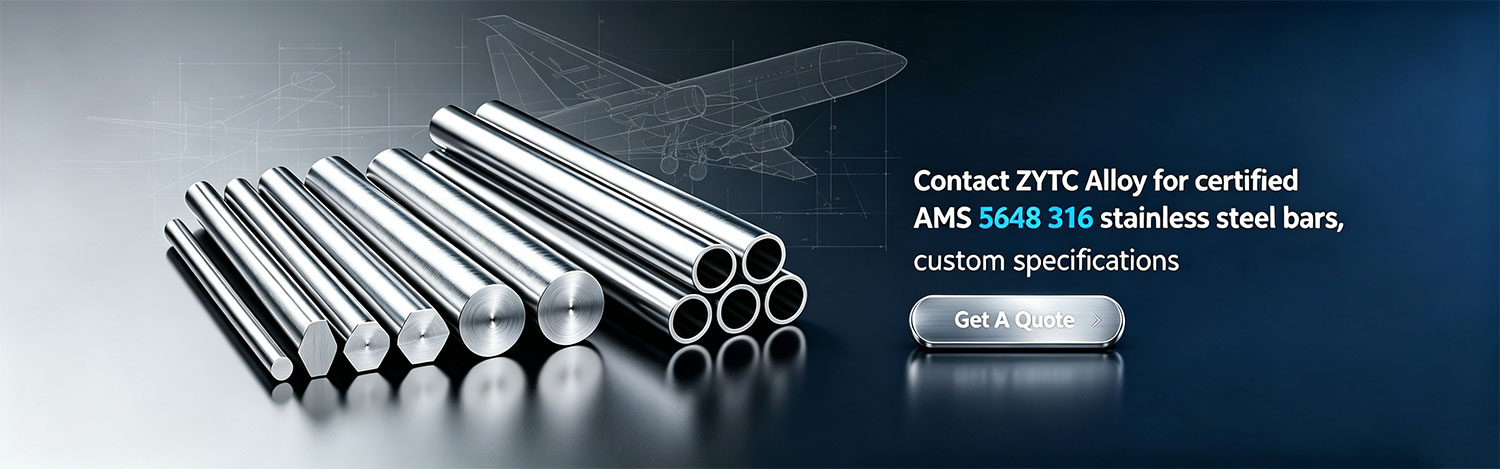
AMS 5648 316 Stainless Steel Bar

AMS 5648 316 stainless steel bar offers 75 ksi tensile strength and superior pitting resistance in chloride environments. Ideal for aerospace, chemical processing, oil & gas, and marine applications.
Quantity :
Contact Now
AMS 5648 specification covers a corrosion- and heat-resistant steel (316 stainless steel / UNS S31600) in the form of bars, wire, forgings, mechanical tubing, flash welded rings, and stock for forging or flash welded rings . 316 stainless steel is an austenitic chromium-nickel alloy with molybdenum added to enhance general corrosion resistance and improve mechanical properties at elevated temperatures.
 
As a reliable China stainless steel supplier,ZYTC Alloy offers certified AMS 5648 316 stainless steel in round bar, flat bar, square bar, hexagon bar, forgings, and tubing with full material traceability.
 

Steel GradeType 316, hot
Chemical Composition
(%)
Carbon (C)0.08 max
Silicon (Si)1.00 max
Manganese (Mn)2.00 max
Phosphorus (P)0.045 max
Sulfur (S)0.030 max
Nickel (Ni)10.0~14.0
Chromium (Cr)16.0~18.0
Molybdenum (Mo)2.00~3.00
Yield Strength (N/㎟)205 min
Tensile Strength (N/㎟)515 min
Elongation (%)40 min
Reduction of area (%)50 min

AMS 5648 – Austenitic Stainless Steel (Solution-Treated)

AMS 5648 specifies an austenitic stainless steel that has been solution heat‑treated to offer excellent corrosion resistance and high‑temperature performance up to 871°C. This standard covers bars, wire, forgings, tubing, and ring‑shaped products.

This grade is fully compatible with Type 316 stainless steel.

Comparison with Type 304 Stainless Steel

Compared to Type 304, Type 316 stainless steel contains an additional 2–3% molybdenum. The inclusion of molybdenum refines the microstructure and enhances high‑temperature strength. It also improves weldability and significantly increases resistance to both pitting corrosion and crevice corrosion.

AMS 5648 (Type 316) vs. AMS 5653 (Type 316L)

In contrast to AMS 5648 (Type 316), AMS 5653 covers Type 316L, which is a low‑carbon version of the alloy. The reduced carbon content provides improved resistance to intergranular corrosion after welding or high‑temperature exposure.


Glossary of Key Technical Terms

TermDefinition
Pitting CorrosionA localized form of corrosion that results in the formation of small pits or cavities that extend from the surface into the underlying metal.
Crevice CorrosionLocalized corrosion that occurs within or immediately adjacent to narrow gaps or crevices formed between a metal surface and another surface (metallic or non‑metallic).
Solution Treatment (Solution Annealing)A heat treatment process in which previously precipitated constituents are dissolved back into solid solution, resulting in a homogeneous microstructure and preventing re‑precipitation.
Austenitic Stainless SteelA stainless steel that maintains an austenitic microstructure at room temperature. Representative grades include AISI 304 and SUS304. These steels do not harden by heat treatment and are generally non‑magnetic. A typical example is the 18% chromium – 8% nickel grade (e.g., 18‑8, SUS304, AISI 304, 1.4301).
Austenitic Cast SteelEven after solution annealing, austenitic cast steels retain an austenitic structure at room temperature, and may contain up to approximately 20% ferrite.


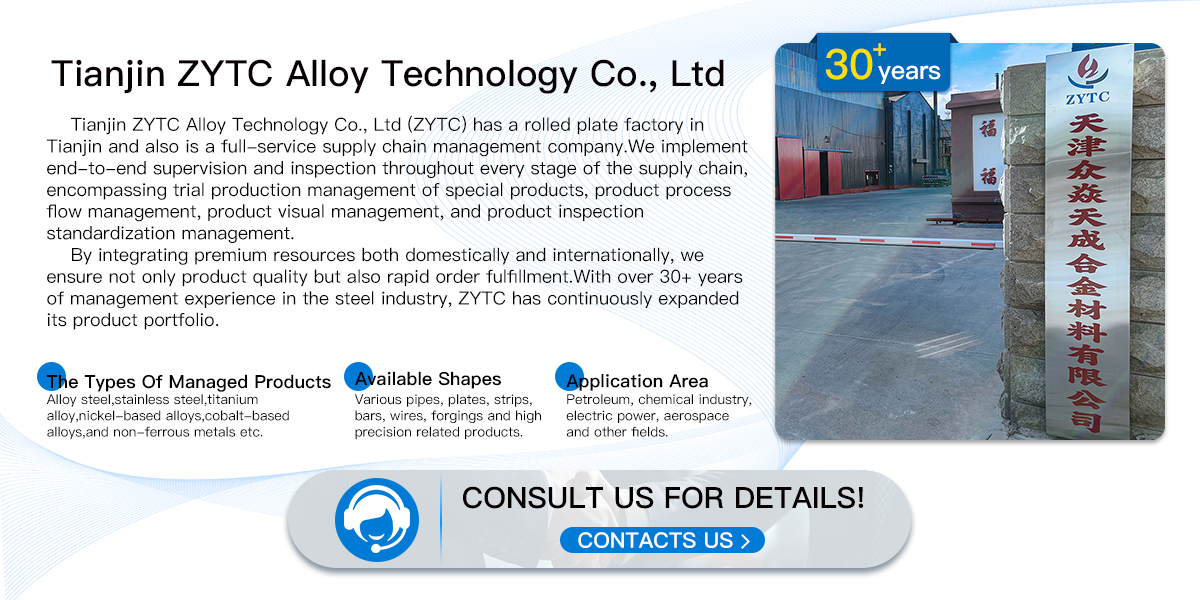
Tianjin ZYTC Alloy Technology Co., Ltd
 
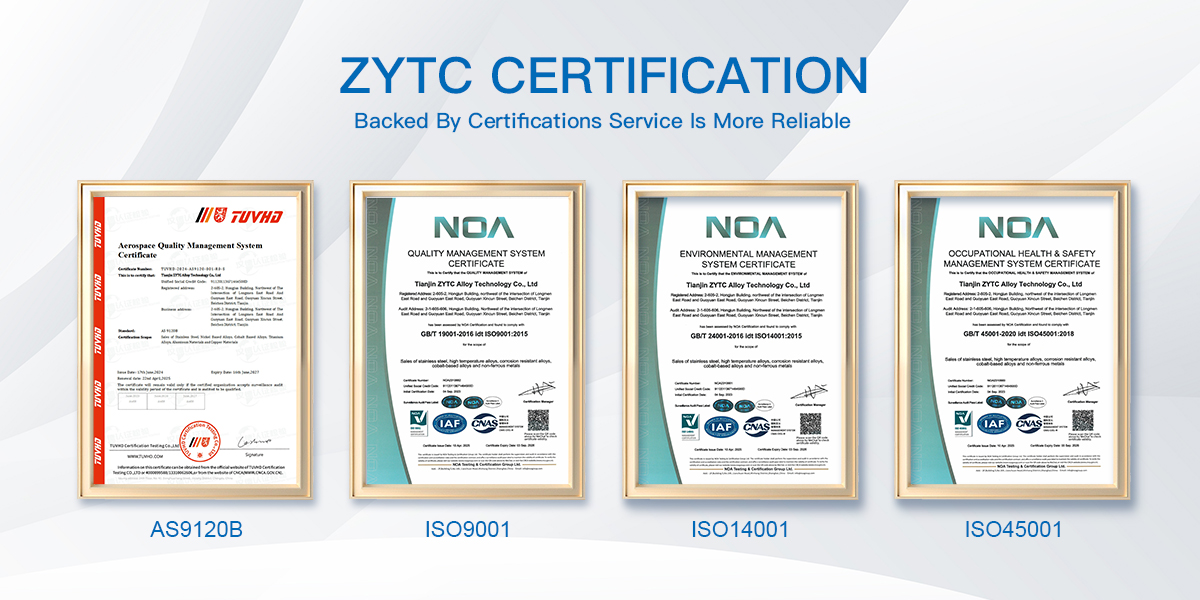
 ZYTC Alloy CERTIFICATION
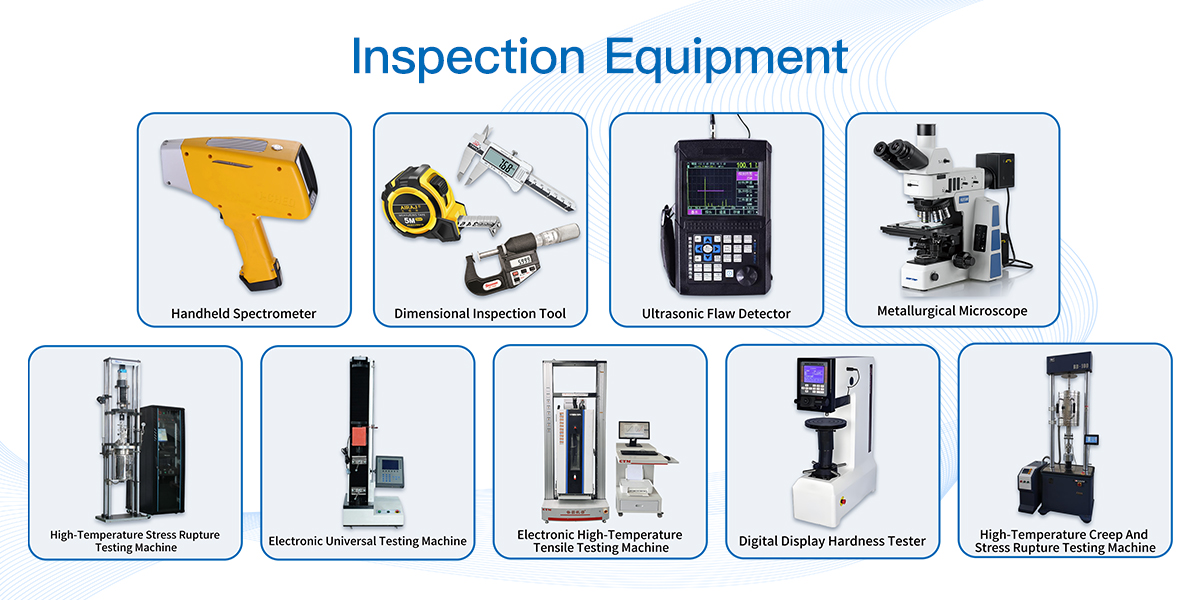
Inspection Equipment