309S is the low-carbon version of 309 stainless steel, specifically formulated to minimize carbide precipitation during welding and high-temperature service. With reduced carbon content (0.08% max), it offers improved weldability and resistance to intergranular corrosion while maintaining excellent oxidation resistance up to 1093°C (2000°F). This grade is the preferred choice for fabricated furnace components, oven linings, and boiler baffles requiring reliable performance in extreme thermal environments .
1. Product Specifications & Physical DataZYTC Alloy supplies 309S stainless steel in comprehensive mill forms for high-temperature industrial applications requiring verified heat resistance and weldability. Available Forms: Bars, coils, wire, sheet, plate, strip, and custom configurations . Specifications: ASTM A240, ASTM A276, ASTM A312, EN 10088-2 1.4833, UNS S30908 .
| Chemical Composition (Weight %) | 309S Stainless Specification |
|---|
| Chromium (Cr) | 22.0 - 24.0 | | Nickel (Ni) | 12.0 - 15.0 | | Carbon (C) | 0.08 max. | | Manganese (Mn) | 2.0 max. | | Silicon (Si) | 1.0 max. | | Phosphorus (P) | 0.045 max. | | Sulfur (S) | 0.030 max. | | Iron (Fe) | Balance |
| Physical Properties | Metric | Imperial |
|---|
| Density | 8.0 g/cm³ | 0.289 lb/in³ | | Melting Point | 1400 - 1455°C | 2550 - 2650°F | | Modulus of Elasticity | 200 GPa | 29,000 ksi | | Poisson's Ratio | 0.3 | 0.3 | | Shear Modulus | 77 GPa | 11,200 ksi |
| Mechanical Properties (Minimum) | Value | Unit |
|---|
| Tensile Strength | 620 MPa | 90 ksi | | Yield Strength (0.2% offset) | 310 MPa | 45 ksi | | Elongation (in 50mm) | 45% | 45% | | Hardness (Brinell) | 147 max. | 147 max. | | Hardness (Rockwell B) | 85 max. | 85 max. | | Izod Impact | 120-165 J | 88.5-122 ft·lbf |
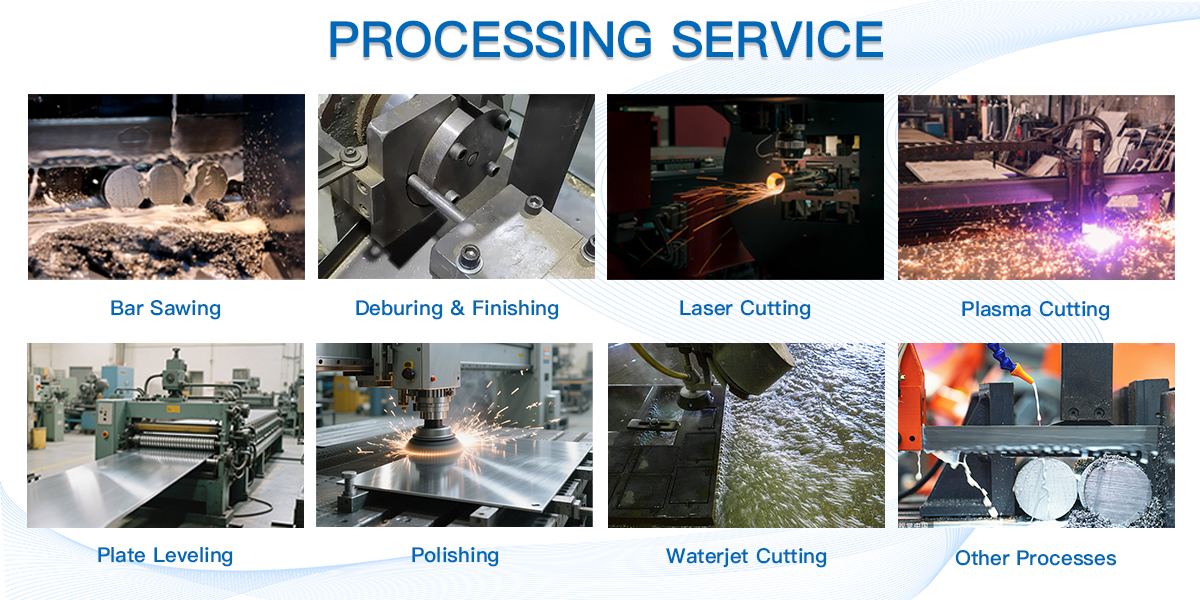
2. Fabrication & Material ComparisonHeat Treatment: Solution anneal 1038-1121°C (1900-2050°F), rapid quench (water or accelerated air cool); cannot be hardened by heat treatment . Hot Working: Similar to 309; hot work at 1177°C (2150°F) recommended . Cold Working: Work-hardening rate high; intermediate annealing required for severe forming operations . Machining: Slightly better machinability than 304; requires sharp tools, positive feeds, and adequate coolant to manage work hardening . Welding: Good weldability using all standard fusion and resistance methods; post-weld annealing recommended for maximum corrosion resistance . Material Comparison: vs. 309 Stainless: Lower carbon provides improved weldability and resistance to sensitization; identical mechanical and high-temperature properties . vs. 310S: Lower nickel (14% vs. 20%) and chromium (23% vs. 25%) than 310S; more cost-effective where 310S's higher alloy content not required . vs. 304 Stainless: Significantly better high-temperature strength and oxidation resistance; specified for service above 800°C . vs. 330 Stainless: Lower nickel than 330 (14% vs. 34-37%); 309S offers good performance at lower cost for moderate high-temperature applications .
3. ApplicationsIndustrial Furnaces: Oven linings, furnace components, radiant tubes, baffles, fire box sheets Boiler Components: Boiler baffles, combustion chambers, superheater supports Heat Treating Equipment: Annealing covers, retorts, baskets, trays, high-temperature containers Waste Processing: Incinerator components, heat recovery equipment Petrochemical: Catalyst grid supports, reactor internals Cement & Lime: Kiln components, preheater parts
Contact ZYTC Alloy for certified 309S stainless steel materials with complete traceability, ASTM/EN specifications, technical datasheets, and competitive pricing on standard sizes or custom-fabricated components. Email: daisy@zytcsteel.com WhatsApp/WeChat: +86 17335753350 |