ZYTC Alloy supplies Alloy K (UNS K94610 / 1.3981) bar, rod, sheet, and wire - a 29% Ni-Fe-Co alloy with thermal expansion matching borosilicate glass & alumina. Ideal for high-reliability glass-to-metal seals in IC lead frames, transistors, and defense applications.
Delivery :
FOB
minimum order :
50 kilograms
Supply Ability :
5000kilograms / Month
Stock Time :
7-10Day
Country of Origin :
CHINA
Quantity :
add to cart
Contact Now
Alloy K (UNS K94610 / 1.3981) is a nickel-iron-cobalt controlled-expansion alloy specifically formulated to match the thermal expansion characteristics of borosilicate glasses and alumina ceramics. With a nominal composition of 29% nickel and 17% cobalt, this alloy achieves precise thermal expansion matching that ensures stress-free, hermetic seals capable of withstanding thermal cycling and shock in critical electronic, aerospace, and medical devices .
1. Product Specifications & Physical Data
ZYTC Alloy supplies UNS K94610 in comprehensive mill forms for hermetic sealing applications requiring verified expansion properties and complete material traceability.
Available Forms: Bar, rod, tube (seamless), sheet, strip, coil, plate, and wire .
Specifications: ASTM F15, AMS I-23011 Class 1, AMS 7726/7727/7728, MIL I-23011, UNS K94610, DIN 1.3981 .
Chemical Composition (Weight %)
Kovar Specification
Nickel (Ni)
29.0
Cobalt (Co)
17.0
Iron (Fe)
Balance (approx. 53%)
Carbon (C)
0.04 max.
Manganese (Mn)
0.50 max.
Silicon (Si)
0.20 max.
Chromium (Cr)
0.20 max.
Aluminum (Al)
0.10 max.
Molybdenum (Mo)
0.20 max.
Titanium (Ti)
0.10 max.
Physical Properties
Metric
Imperial
Density
8.3 - 8.36 g/cm³
0.302 lb/in³
Melting Point
1449 - 1450°C
2640°F
Curie Temperature
435°C
815°F
Modulus of Elasticity
138 - 207 GPa
20.0 - 30.0 × 10⁶ psi
Thermal Conductivity (20°C)
16.7 - 17.3 W/m·K
116 - 120 BTU·in/hr·ft²·°F
Mechanical Properties (Annealed)
Metric
Imperial
Tensile Strength
517 - 540 MPa
75 - 78 ksi
Yield Strength (0.2% offset)
276 - 380 MPa
40 - 55 ksi
Elongation at Break
30 - 42%
30 - 42%
Hardness (HRB)
78 - 80
78 - 80
2. Fabrication & Material Comparison
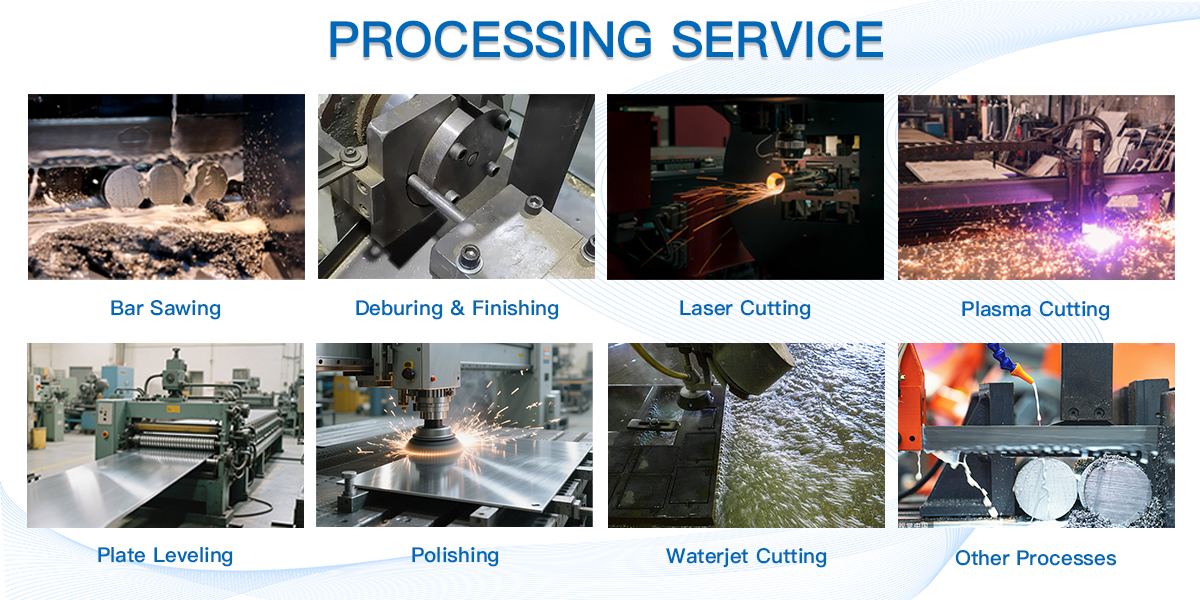
Kovar offers good fabricability with appropriate techniques, though its controlled-expansion characteristics require careful thermal processing to maintain specified CTE values.
Annealing: Standard anneal at 1093°C (2000°F) followed by air cooling. For critical expansion applications, hydrogen atmosphere anneal at 899°C (1650°F) for 1 hour, then raise to 1099°C (2010°F) for 15 minutes, cool to room temperature within 1 hour .
Oxidation Treatment: Prior to glass sealing, parts are typically oxidized in controlled N₂-H₂-H₂O atmosphere to form Fe₃O₄ layer without Fe₂O₃, optimizing bond strength .
Forming: Excellent ductility permits deep drawing, stamping, coining, and other cold forming operations .
Machining: Readily machined using conventional methods for nickel-iron alloys .
Welding: Weldable using all conventional methods including GTAW, resistance welding, and laser welding .
Applications
Electronics: Transistor leads and headers, integrated-circuit lead frames, hybrid circuit packages, dual-in-line packages, flat packs
Power Systems: High-power transmitting valves, microwave tubes, X-ray tubes, power tubes, vacuum interrupters
Lighting: Photography flash bulbs, specialized lighting systems
Instrumentation: Scientific instruments, vacuum system components
Contact ZYTC Alloy for certified Alloy K (UNS K94610 / 1.3981) materials with complete traceability, ASTM F15 specifications, technical datasheets, and competitive pricing on standard sizes or custom-fabricated components.